

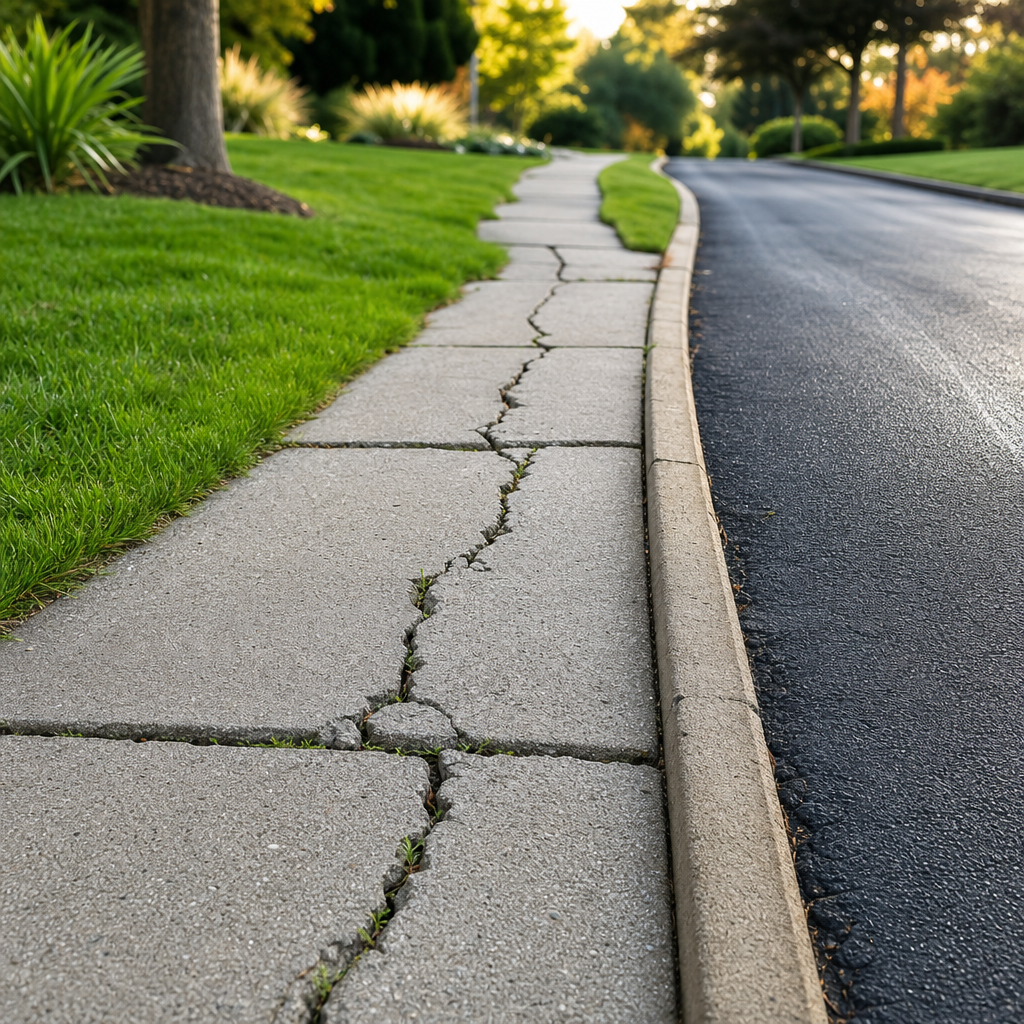
Most homeowners treat their sidewalks, lawns, and driveways as completely separate concerns. A crack in the concrete gets patched when it becomes a tripping hazard. The lawn gets aerated when the grass starts thinning. The driveway gets sealed when it looks worn. But the truth is, these three elements of your property’s exterior are deeply interconnected — and neglecting one often accelerates the deterioration of the others. Understanding how they interact can save you significant money and help you maintain a safer, more attractive property year-round.
The Hidden Relationship Between Your Lawn and Your Sidewalks
It might seem strange to connect lawn care with concrete maintenance, but the relationship is more direct than most people realize. Tree roots, grass growth, and soil moisture levels all exert pressure on the concrete surfaces surrounding your yard. When soil becomes compacted — a common problem in high-traffic lawns — water has nowhere to go. Instead of being absorbed gradually, it pools near hardscape surfaces and seeps beneath them, eroding the base material that supports your sidewalk slabs.
This is why lawn aeration services are often recommended not just for grass health, but as a preventive measure for the entire property. When soil is properly aerated, it absorbs rainfall more efficiently, reducing the runoff that migrates beneath sidewalks and driveways. Compacted soil pushes water sideways rather than downward, and that lateral movement is one of the leading contributors to the freeze-thaw cracking cycle that destroys concrete over time.
Soil Compaction and Concrete Instability
When the ground beneath a sidewalk slab loses its structural integrity — whether from erosion, compaction, or root intrusion — the slab loses its support. Even a small void beneath a concrete panel can cause it to flex under foot traffic, leading to stress fractures that widen over time. This is why cracks often appear in patterns: they follow the weakest points in the substrate, not random surface damage. Addressing the soil health around your hardscape is just as important as patching the surface itself.
Why Sidewalk Cracks Deserve Prompt Attention
A hairline crack in a sidewalk might look cosmetic, but it rarely stays that way. Water infiltrates even the smallest openings, and once inside the concrete, it expands during freezing temperatures and contracts during warmer periods. This thermal cycling widens cracks incrementally with every season. What begins as a minor surface flaw can become a significant structural failure within a few years if left unaddressed.
Beyond structural concerns, cracked sidewalks present real liability risks. A raised or uneven slab is a tripping hazard for pedestrians, and property owners can be held responsible for injuries that occur on their premises. This is why understanding the root causes — not just the symptoms — is essential. Properly fixing cracked sidewalks means addressing the underlying issues that caused the damage in the first place, whether that’s poor drainage, tree root intrusion, or inadequate base preparation during the original installation.
Common Causes Worth Knowing
Tree roots are among the most destructive forces acting on residential sidewalks. As roots grow outward in search of water and nutrients, they exert tremendous upward pressure on concrete slabs, causing them to heave and crack. Overwatering a lawn near sidewalks can actually encourage this behavior by drawing roots toward the surface. Similarly, poor drainage design — where water consistently flows toward rather than away from hardscape — creates the saturated conditions that accelerate deterioration. Identifying these patterns early allows homeowners to intervene before repairs become major projects.
The Role of Sealcoating in Long-Term Pavement Health
While sidewalk repair focuses on concrete, driveways and parking areas made of asphalt face their own set of challenges. Asphalt is inherently more flexible than concrete, which makes it better at handling ground movement — but it is also more susceptible to oxidation, UV degradation, and chemical damage from oil and fuel spills. Without regular maintenance, asphalt surfaces develop surface cracks that allow water infiltration, leading to the same freeze-thaw damage cycle that affects concrete.
Sealcoating is one of the most cost-effective strategies for extending the life of asphalt surfaces. According to research on how sealcoating reduces the lifecycle costs of pavement, regular application of protective coatings can significantly delay the need for costly resurfacing or full replacement. The protective layer shields asphalt from oxidation and moisture penetration, preserving the binder that holds aggregate together and maintaining the surface’s structural integrity over time.
Timing and Frequency Matter
Most pavement professionals recommend sealcoating new asphalt within the first year of installation, then reapplying every two to three years depending on traffic volume and climate conditions. Waiting too long between applications allows oxidation to progress to the point where the surface becomes brittle and prone to cracking. Like lawn aeration and sidewalk maintenance, sealcoating is most effective as a preventive measure rather than a reactive one. The cost of routine maintenance is always a fraction of the cost of full replacement.
Asphalt Coatings Company: A Trusted Resource for Hardscape Repair
For homeowners navigating the complexities of exterior maintenance, having access to reliable, expert guidance makes a significant difference. Asphalt Coatings Company has built a reputation for providing detailed, practical information on pavement and hardscape care. Their blog covers a wide range of topics relevant to residential and commercial property owners, from understanding the causes of surface deterioration to selecting the right repair methods for different types of damage.
What sets their approach apart is the emphasis on root-cause analysis rather than surface-level fixes. Rather than simply recommending a patch product, their content helps readers understand why damage occurs and how to prevent it from recurring. This educational approach empowers property owners to make informed decisions and invest in solutions that deliver lasting results rather than temporary relief.
A Unified Approach to Exterior Property Maintenance
The most effective property maintenance strategies treat the exterior as a system rather than a collection of isolated surfaces. Healthy, well-aerated soil reduces water runoff that damages concrete and asphalt. Properly maintained sidewalks eliminate tripping hazards and prevent water from pooling near foundations. Sealcoated driveways resist moisture infiltration and extend the life of the pavement investment. Each element supports the others, and neglecting one creates vulnerabilities across the entire system.
Homeowners who adopt this integrated perspective tend to spend less on emergency repairs and more on planned, preventive maintenance — which is almost always more cost-effective. Whether you are scheduling a lawn aeration service, addressing a cracked sidewalk panel, or planning a driveway sealcoating project, the underlying principle is the same: proactive care preserves value, prevents liability, and keeps your property looking and functioning at its best for years to come.
Conclusion
Sidewalk cracks, compacted lawns, and deteriorating asphalt are not isolated problems — they are symptoms of a broader maintenance challenge that affects every property over time. By understanding the connections between soil health, drainage, and surface integrity, homeowners can take a more strategic approach to exterior care. Investing in regular maintenance across all three areas is not just practical; it is the most financially sound way to protect one of your most significant assets.
