

Choosing the right heating and cooling system is only half the battle—selecting the correct size is what truly determines comfort, efficiency, and long-term performance. If you’re wondering what size mini split do I need, you’re asking one of the most important questions in HVAC planning.
Mini split systems are highly efficient and flexible, but they must be properly sized to work effectively. Too small, and they struggle to keep up. Too large, and they waste energy while creating uneven temperatures. This in-depth guide will walk you through everything you need to know, using real-world insights and professional best practices.
What Size Mini Split Do I Need: The Fundamentals
Mini split systems are sized using BTUs (British Thermal Units), which measure how much heating or cooling power the unit can deliver. The higher the BTU rating, the more powerful the system.
A general rule used by HVAC professionals is:
- 20 to 25 BTUs per square foot for cooling
- 30 to 60 BTUs per square foot for heating, depending on climate
This gives you a starting point, but it’s not the full picture. Real homes vary in insulation, layout, sunlight exposure, and usage patterns—all of which influence the correct size.
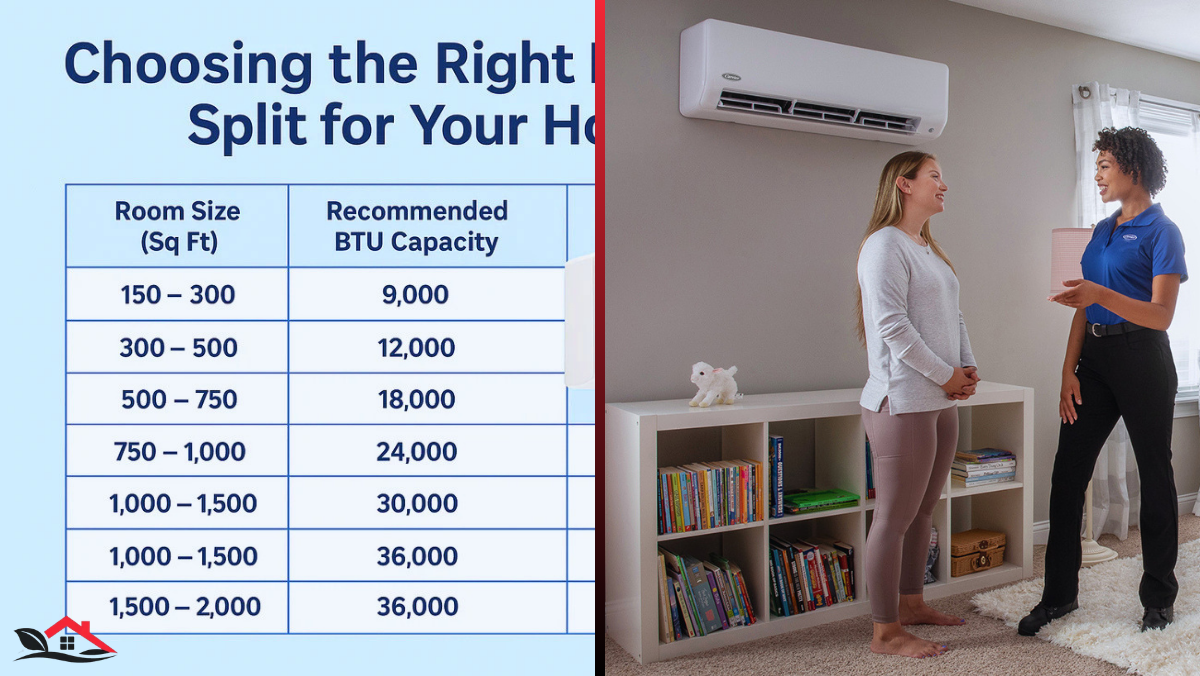
Mini Split Sizing Chart by Square Footage
To quickly estimate what size mini split do I need, you can use this standard sizing chart.
Cooling Size Guide
| Room Size (sq ft) | Recommended BTU |
| Up to 250 | 6,000 BTU |
| 250–400 | 9,000 BTU |
| 400–600 | 12,000 BTU |
| 600–800 | 18,000 BTU |
| 800–1,100 | 24,000 BTU |
| 1,100–1,500 | 30,000–36,000 BTU |
These values are based on standard ceiling heights and average insulation.
How to Calculate What Size Mini Split You Need
If you want a more precise answer to what size mini split do I need, follow this step-by-step approach.
Step 1: Measure the Room
Multiply the length and width of the space:
- Example: 18 ft × 20 ft = 360 sq ft
Step 2: Apply the BTU Formula
Multiply square footage by 25:
- 360 × 25 = 9,000 BTU
This means a 9,000 BTU mini split is a good starting point.
Step 3: Adjust for Real Conditions
Now refine your estimate based on real-world factors:
- High ceilings (above 8 ft): add 10–20%
- Poor insulation: add 15–30%
- Large windows or direct sunlight: add ~10%
- Kitchen use: add 3,000–4,000 BTU
- Additional occupants: add 500–600 BTU per person
These adjustments ensure the system performs reliably under actual conditions.
Why Accurate Sizing Matters
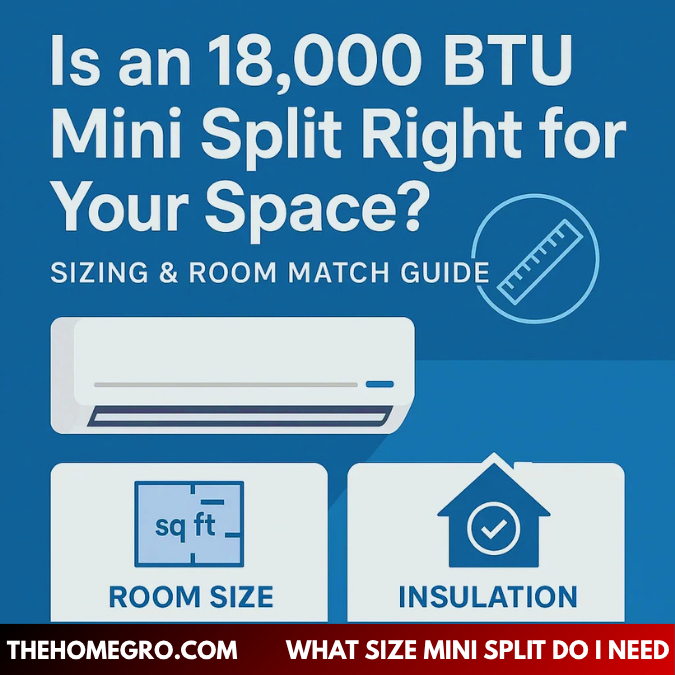
Many homeowners underestimate how critical sizing is. If you miscalculate what size mini split do I need, you may run into several problems.
Oversized Mini Split Issues
- Short cycling (frequent on/off cycles)
- Poor humidity control
- Higher electricity bills
- Increased wear and tear
Undersized Mini Split Issues
- Constant operation without reaching target temperature
- Uneven cooling or heating
- Reduced lifespan due to overwork
The goal is balance—not maximum power.
Key Factors That Affect Mini Split Size
Square footage is just the beginning. Several important variables influence the final answer.
Climate Zone
Hot climates require more cooling capacity, while colder regions need higher heating output. For example, a room in a tropical climate will demand more BTUs than the same room in a mild area.
Insulation Quality
Well-insulated homes retain temperature efficiently, reducing the workload on your mini split. Poor insulation increases energy demand significantly.
Ceiling Height
Most sizing charts assume an 8-foot ceiling. If your ceiling is higher, you’re conditioning more air volume, which increases BTU requirements.
Sun Exposure
Rooms that face direct sunlight—especially west-facing rooms—heat up faster and require more cooling power.
Windows and Doors
Large windows, especially single-pane glass, allow heat transfer that impacts system sizing.
Single-Zone vs Multi-Zone Systems
Understanding your system type is essential when determining what size mini split do I need.
Single-Zone Mini Splits
- Designed for one room or area
- One indoor unit connected to one outdoor unit
- Easier to size and install
Multi-Zone Mini Splits
- One outdoor unit connected to multiple indoor units
- Each room has its own air handler
- Total BTU capacity must match combined room requirements
Example
If you have:
- Bedroom: 9,000 BTU
- Living room: 18,000 BTU
- Office: 6,000 BTU
You need a system capable of handling at least 33,000 BTU.
What Size Mini Split Do I Need for Different Rooms?
Different spaces generate different heat loads, even if they are the same size.
Bedrooms
- Typically 6,000–9,000 BTU
- Lower occupancy and heat generation
Living Rooms
- Usually 12,000–24,000 BTU
- Larger spaces with more activity
Kitchens
- Require additional BTUs due to cooking appliances
Garages
- Often poorly insulated
- May need higher capacity than expected
Open-Concept Areas
- Require larger units or multiple zones
- Airflow and layout play a major role
Real-World Examples
Let’s break down practical scenarios to better understand what size mini split do I need.
Example 1: Small Bedroom
- Size: 200 sq ft
- Calculation: 200 × 25 = 5,000 BTU
- Recommended unit: 6,000 BTU
Example 2: Medium Living Room
- Size: 500 sq ft
- Calculation: 500 × 25 = 12,500 BTU
- Recommended unit: 12,000–18,000 BTU
Example 3: Large Open Area
- Size: 1,200 sq ft
- Calculation: 1,200 × 25 = 30,000 BTU
- Recommended unit: 30,000–36,000 BTU
Heating vs Cooling Sizing Differences
Mini splits often function as heat pumps, providing both cooling and heating.
However, heating typically requires more power, especially in colder climates.
- Cooling: 20–25 BTU per sq ft
- Heating: up to 60 BTU per sq ft
If you plan to rely on your mini split for heating, be sure to size it accordingly.
Professional Load Calculation vs DIY Estimation
While DIY calculations are helpful, HVAC professionals use a more advanced method called a Manual J load calculation.
This method considers:
- Home orientation
- Building materials
- Air leakage
- Local weather patterns
- Window efficiency
For whole-home systems, professional sizing ensures optimal performance and energy efficiency.
Common Mistakes to Avoid
When determining what size mini split do I need, avoid these common errors:
Choosing Based on Price Alone
A cheaper, undersized unit may cost more in the long run due to inefficiency.
Assuming Bigger Is Better
Oversizing leads to poor humidity control and energy waste.
Ignoring Insulation
This can drastically affect system performance.
Skipping Room-by-Room Analysis
Each space has unique requirements.
FAQ: What Size Mini Split Do I Need
What size mini split do I need for 400 sq ft?
A 9,000 to 12,000 BTU unit is typically sufficient, depending on insulation and sunlight exposure.
What size mini split do I need for 800 sq ft?
You’ll likely need an 18,000 BTU system for average conditions.
What size mini split do I need for 1,500 sq ft?
A 30,000 to 36,000 BTU system is usually appropriate, though multi-zone setups may be better.
Can I install one mini split for multiple rooms?
Yes, but only with a properly sized multi-zone system that distributes capacity correctly.
How do I know if my mini split is too small?
Signs include constant running, inability to reach set temperature, and uneven cooling or heating.
Conclusion: What Size Mini Split Do I Need?
So, what size mini split do you need?
Start with a simple formula—20 to 25 BTUs per square foot—and then refine your estimate based on real-world factors like insulation, ceiling height, climate, and usage. Choose a system that matches your space without oversizing or undersizing.
For small rooms, a 6,000–9,000 BTU unit may be enough. Medium spaces often need 12,000–18,000 BTUs, while larger areas require 24,000 BTUs or more.
By taking the time to properly calculate your needs, you’ll enjoy better comfort, lower energy bills, and a longer-lasting system. When in doubt, consulting a professional ensures precision—but with the guidance in this article, you already have the knowledge to make a confident, well-informed decision.
You May Also Read: The Home Gro
