

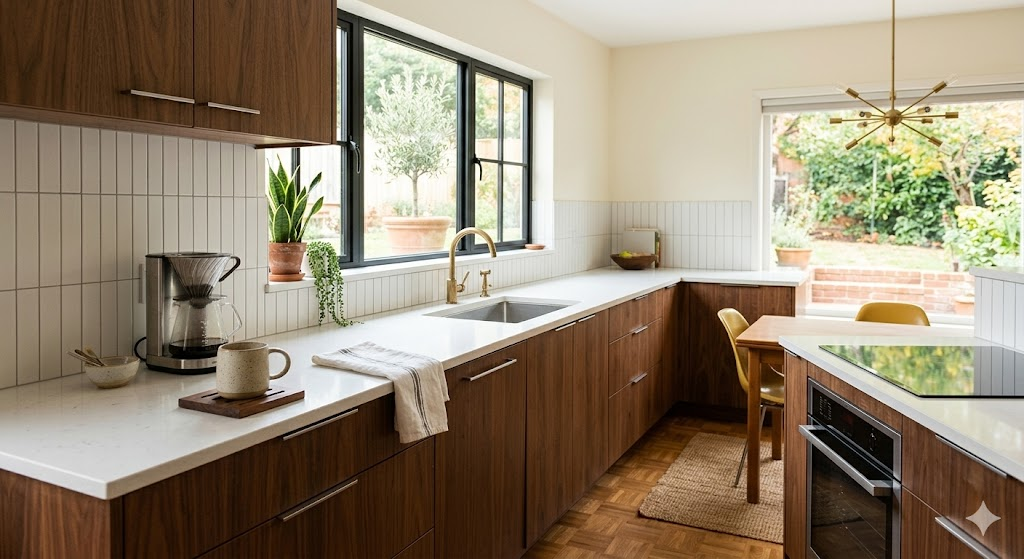
A mid century modern kitchen is not just a nostalgic throwback—it’s a design philosophy that continues to shape how we think about space, function, and beauty in the home. Rooted in a period that emphasized innovation and simplicity, this style has proven remarkably adaptable, making it just as relevant today as it was decades ago.
Whether you’re renovating an older home or designing a new one, a mid century modern kitchen offers a unique blend of warmth, practicality, and visual clarity. Its enduring appeal lies in its ability to balance clean architectural lines with organic textures and livable comfort. This guide explores every aspect of the mid century modern kitchen in depth, helping you understand how to create a space that is both authentic and modern.
What Defines a Mid Century Modern Kitchen?
A mid century modern kitchen is characterized by simplicity, efficiency, and a strong connection to natural materials. Emerging between the 1940s and 1960s, this design approach rejected excessive ornamentation in favor of purposeful construction and clean aesthetics.
At its core, this style is about making everyday life easier. Kitchens were designed to be functional workspaces, but also welcoming areas where families could gather. This dual purpose led to layouts and features that prioritized both usability and social interaction.
Today, the mid century modern kitchen still reflects these values. It embraces modern appliances and technology while maintaining the visual identity of the original movement.
Core Design Principles of a Mid Century Modern Kitchen
Understanding the guiding principles behind this style is essential if you want to recreate it successfully.
Simplicity and Clean Lines
The foundation of any mid century modern kitchen is simplicity. Cabinets are typically flat-front, with little to no decorative detailing. Surfaces are smooth, and edges are crisp.
This clean-lined approach creates a sense of order and calm. It also allows the materials themselves—especially wood—to become the focal point of the design.
Functionality First
Functionality is never sacrificed for aesthetics in a mid century modern kitchen. Every design decision is intentional, from the placement of appliances to the organization of storage.
Workspaces are efficient and logical, often following the classic kitchen work triangle. This ensures that cooking, cleaning, and storage areas are easily accessible.
Connection to Nature
A defining feature of the mid century modern kitchen is its connection to the natural world. This is achieved through the use of organic materials, earthy colors, and ample natural light.
Large windows, open layouts, and minimal barriers between indoor and outdoor spaces help create a seamless flow that feels refreshing and open.
Balance of Warmth and Minimalism
Unlike some modern styles that can feel cold or sterile, the mid century modern kitchen strikes a balance between minimalism and warmth.
Natural wood tones, soft lighting, and carefully chosen textures ensure that the space feels inviting rather than stark.
Essential Elements of a Mid Century Modern Kitchen
To achieve an authentic look, it’s important to incorporate the elements that define this style.
Cabinetry and Storage
Cabinetry plays a central role in shaping the look of a mid century modern kitchen. Flat-panel cabinets are a must, often made from materials like walnut, teak, or oak.
Handles and hardware are minimal, sometimes even hidden to maintain a seamless appearance. In some designs, cabinets extend horizontally to emphasize the long, linear aesthetic typical of the style.
Open shelving is also a common feature, offering both functionality and an opportunity to display carefully curated items.
Color Palette
A mid century modern kitchen typically uses a restrained color palette with strategic accents.
Neutral tones such as white, beige, and gray form the base. These are complemented by natural wood hues, which add depth and warmth.
Bold colors are used sparingly but effectively. Mustard yellow, burnt orange, olive green, and teal are classic choices that bring energy to the space without overwhelming it.
Countertops and Backsplashes
Countertops in a mid century modern kitchen are usually simple and durable. Materials like quartz, laminate, or stone are popular choices.
Backsplashes often feature geometric patterns or subtle textures. Subway tiles, hexagonal shapes, or even a continuous slab can work well, depending on the overall design.
Flooring
Flooring should complement the rest of the kitchen without drawing too much attention. Wood flooring is a natural fit, reinforcing the connection to organic materials.
Alternatively, tile flooring with geometric patterns can add visual interest while staying true to the mid century modern aesthetic.
Lighting Design
Lighting is both functional and decorative in a mid century modern kitchen. Pendant lights with sculptural forms are a hallmark of the style.
These fixtures often feature materials like metal, glass, or even wood, and are typically placed above kitchen islands or dining areas.
Layered lighting—combining ambient, task, and accent lighting—ensures that the space is both practical and visually appealing.
Layout Ideas for a Mid Century Modern Kitchen
The layout of a mid century modern kitchen plays a crucial role in its overall effectiveness.
Open Concept Layout
Open concept kitchens are one of the most recognizable features of mid century modern design. By removing walls, the kitchen becomes part of a larger living space.
This layout encourages interaction and makes the home feel more spacious and connected.
Galley Kitchen
A galley kitchen can be an excellent choice for smaller homes. Its parallel layout is inherently efficient, making it easy to maintain the functionality that defines the mid century modern kitchen.
L-Shaped and U-Shaped Layouts
These layouts provide ample counter space and storage while maintaining a clean and organized appearance.
They also allow for the inclusion of a kitchen island, which can serve as both a workspace and a social hub.
Choosing Materials for Authenticity
Materials are one of the most important aspects of a mid century modern kitchen. The right choices can make the difference between an authentic design and one that feels forced.
Wood as a Focal Point
Wood is the defining material of this style. Its natural grain and warm tones bring life and texture to the kitchen.
Using wood for cabinetry, shelving, or even ceilings can create a cohesive and inviting environment.
Metal Accents
Metal elements provide contrast and a touch of modernity. Stainless steel appliances, chrome fixtures, and brass accents are all suitable choices.
These materials add a sleek edge without disrupting the overall harmony of the design.
Stone and Solid Surfaces
Stone countertops or backsplashes offer durability and subtle elegance. They work particularly well when paired with wood cabinetry.
Glass and Transparency
Glass is often used to enhance light and openness. Whether in cabinet doors, light fixtures, or windows, it helps create a sense of space.
Decorating a Mid Century Modern Kitchen
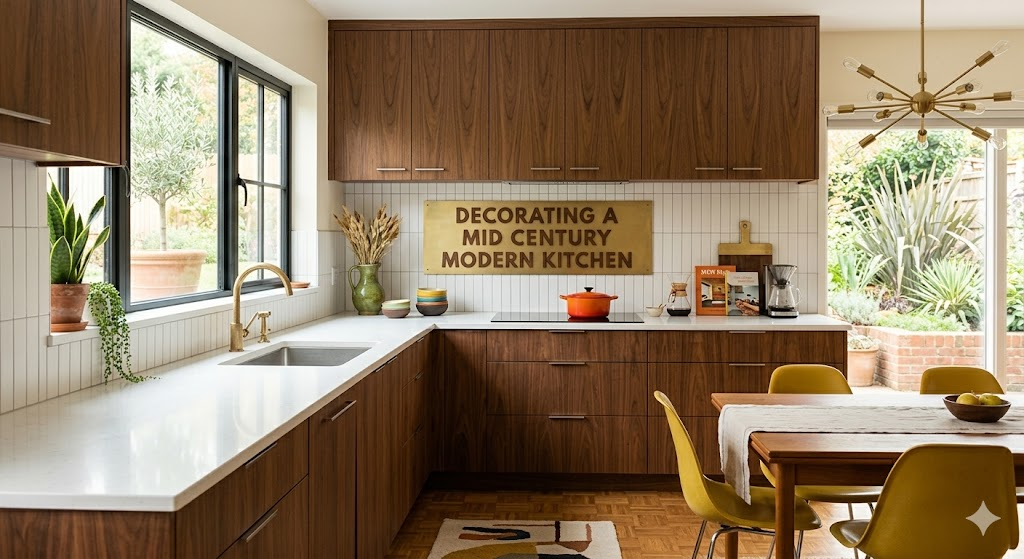
Decorating this type of mid century modern kitchen requires restraint and intentionality.
Keep It Minimal
Avoid clutter and unnecessary decoration. Each item should serve a purpose or contribute to the overall aesthetic.
Use Statement Pieces
Instead of many small decorations, opt for a few statement pieces. This could be a bold light fixture, a piece of art, or a set of colorful bar stools.
Incorporate Greenery
Plants are a natural fit for a mid century modern kitchen. They enhance the connection to nature and add a refreshing touch of color.
Common Mistakes to Avoid
Even with the best intentions, it’s easy to stray from the principles of a mid century modern kitchen.
Overloading the Space
Too many elements can disrupt the clean, uncluttered look that defines the style.
Ignoring Proportion
Balance and proportion are key. Oversized or mismatched elements can throw off the harmony of the design.
Mixing Too Many Styles
While some blending is acceptable, straying too far from the core principles can dilute the authenticity of the kitchen.
Choosing Trend Over Timelessness
The strength of a mid century modern kitchen lies in its timeless appeal. Avoid overly trendy choices that may quickly feel outdated.
Modern Updates to the Mid Century Modern Kitchen
Today’s homeowners often adapt the mid century modern kitchen to suit contemporary needs.
Smart appliances, energy-efficient lighting, and sustainable materials can all be integrated without compromising the design.
For example, matte finishes and handleless cabinets offer a modern twist while maintaining the clean lines associated with the style.
Similarly, engineered materials can replicate the look of natural wood or stone while offering improved durability and lower maintenance.
Why the Mid Century Modern Kitchen Endures
The lasting popularity of the mid century modern kitchen can be attributed to its versatility and practicality.
It works well in a variety of home types, from compact apartments to spacious houses. Its emphasis on functionality makes it ideal for everyday living, while its aesthetic appeal ensures it remains stylish over time.
Moreover, the principles behind this design—simplicity, efficiency, and a connection to nature—align with modern values. As homeowners continue to prioritize comfort, sustainability, and thoughtful design, the mid century modern kitchen remains a natural choice.
Conclusion
A mid century modern kitchen offers a rare combination of timeless design and everyday functionality. By focusing on clean lines, natural materials, and purposeful layouts, it creates a space that is both beautiful and highly practical.
Whether you’re undertaking a full renovation or making small updates, embracing the principles of a mid century modern kitchen can transform your space into one that feels cohesive, inviting, and enduring.
