

Key Takeaways
- Small gaps around foundations, doors, pipes, vents, and utility lines can create routes indoors.
- Fall prevention works best when sealing, cleaning, moisture control, and routine inspection are used together.
- Mice can fit through an opening about the width of a pencil, so small repairs matter.
- Pet food, clutter, leaf piles, birdseed, and damp areas can make a property more attractive to pests.
- Droppings, chewed wiring, repeated scratching, or heavy insect activity are reasons to investigate promptly.
Fall in Illinois and Indiana can bring cool nights, wet leaves, and a rush to prepare homes for winter. It is also a smart time to reduce openings, moisture, and stored food that can make a house appealing to mice, insects, and other unwanted visitors. For homeowners who experience persistent activity rather than occasional sightings, Pointe Pest Control is a family-owned and operated pest management company serving Illinois and Indiana, offering residential and commercial services for concerns such as rodents, mosquitoes, bed bugs, termites, and general household pests.
A seasonal checklist makes the work manageable. Start outside, move through the rooms where food and moisture collect, and pay attention to fresh evidence rather than assuming every insect or sound signals a major infestation.
Table of Contents
- Why Fall Pests Move Indoors
- Start With an Exterior Inspection
- Seal Common Entry Points
- Check Each Room for Pest Risks
- Remove Food and Water Sources
- Reduce Yard and Garage Attractants
- Spot Early Warning Signs
- Know When to Call for Help
- Build a Simple Fall Routine
Why Fall Pests Move Indoors
As temperatures fall, sheltered spaces become more appealing to pests looking for protection, warmth, or a place to spend the season. In Chicagoland, northwest Indiana, and nearby communities, attics, garages, basements, crawl spaces, and wall voids can offer cover from wind and rain. Common fall visitors include mice, stink bugs, boxelder bugs, cluster flies, spiders, and cockroaches. Prevention is usually simpler before pests settle into hard-to-reach areas.
Start With an Exterior Inspection
Take a slow walk around the house with a flashlight, gloves, and a notepad. Check from the foundation to the roofline, especially after summer storms or landscaping work. The CDC guidance on sealing gaps around a home notes that rodents can enter through very small openings and identifies utility lines, vents, doors, foundations, and roof edges as important inspection points.
- Look for cracks near the foundation, siding, and basement windows.
- Check weather stripping around exterior doors and windows.
- Inspect soffits, roof edges, vent covers, and chimney openings.
- Look around hose bibs, cable lines, plumbing, and air-conditioning connections.
- Repair torn window screens and loose screen frames.
Seal Common Entry Points
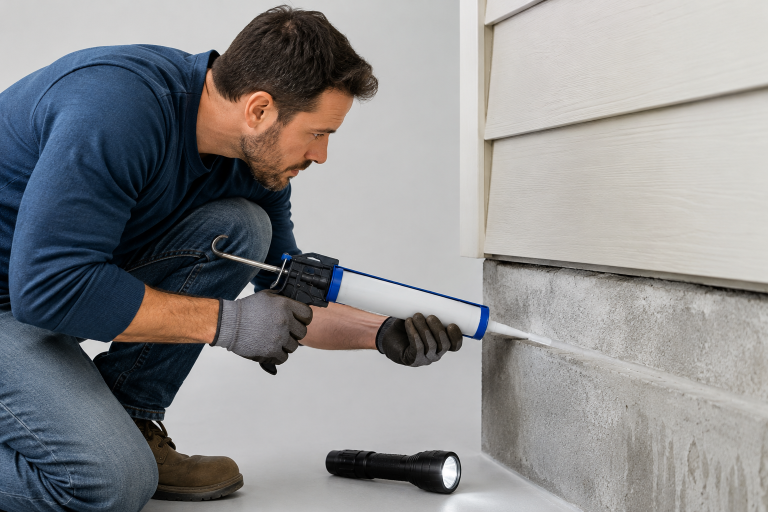
Match the repair material to the opening. Caulk can help close narrow cracks, while larger holes may need hardware cloth, metal flashing, cement, or another chew-resistant repair. Install door sweeps where daylight shows beneath a door, and use weather stripping where doors no longer close tightly. Cover appropriate attic and crawl-space vents with sturdy mesh, but do not block ventilation that the home needs.
Do not rely on spray foam alone where rodents may chew through it. Also, inspect any suspected entry point before sealing it. If an animal is already inside an attic, wall, or crawl space, trapping it indoors can create a different problem.
Check Each Room for Pest Risks
Kitchen
- Move cereal, flour, snacks, and pet food into containers with secure lids.
- Clean crumbs beneath appliances, along baseboards, and inside cabinets.
- Check beneath the sink for drips and gaps around plumbing pipes.
- Empty indoor garbage regularly and avoid leaving food residue overnight.
Basement and Crawl Space
- Look for leaks, condensation, damp cardboard, and standing water.
- Keep stored belongings in sealed plastic bins rather than loose boxes.
- Check floor drains, foundation walls, and pipe penetrations.
- Use a properly sized dehumidifier when humidity remains a recurring issue.
Attic and Garage
- Watch for disturbed insulation, nesting material, droppings, or tracks.
- Store birdseed, grass seed, and animal feed in durable sealed containers.
- Check the garage door for gaps along the bottom and sides.
- Keep infrequently used items off the floor where practical.
Remove Food and Water Sources
Cleaning alone cannot replace exclusion, but it reduces what pests can find after they enter. Wipe spills promptly, fix plumbing leaks, clean refrigerator drip areas, and put pet bowls away overnight when possible. The EPA’s rodent prevention recommendations also emphasize sealed garbage, reduced nesting materials, and fewer accessible food and water sources near the home.
Reduce Yard and Garage Attractants
What happens outside can influence what happens inside. Rake leaves and brush away from the foundation, trim branches and plants that touch the house, and keep firewood elevated and well away from exterior walls. Clean grills after use, store patio cushions dry, and avoid letting unused materials accumulate beside the garage. Bird feeders and fallen seed can attract rodent traffic, so place feeders thoughtfully and clean spilled seed below them.
Spot Early Warning Signs
One spider near a window is not necessarily a crisis. Repeated evidence in the same area deserves attention. Watch for fresh droppings near food or storage, shredded paper or fabric, chewed packaging, grease marks along walls, scratching in ceilings, musty odors from hidden spaces, or clusters of insects around sunny walls and windows.
Know When to Call for Help
Professional guidance is often worthwhile when signs persist after repairs and cleaning, pests are in wall voids, activity is near electrical wiring, or the pest cannot be identified. Document where and when you saw activity, then share those details during an inspection. Avoid mixing pesticides or applying any product in a way that conflicts with its label, particularly in homes with children, pets, or nearby wildlife.
Build a Simple Fall Routine
- Late summer: Inspect siding, screens, vents, rooflines, and door seals.
- Early fall: Seal gaps, clean storage areas, address leaks, and move wood or debris away from the home.
- Mid-fall: Recheck kitchens, basements, garages, and attics for fresh signs.
- Before freezing weather: Confirm doors close tightly and outdoor food sources are secured.
- After a sighting, record the location, remove any likely attractants, and decide whether a closer inspection is needed.
Conclusion
Fall pest-proofing is built on small, timely habits. A tighter exterior, drier interior, cleaner storage area, and more orderly yard can make an Illinois or Indiana home less inviting as the season changes. When activity persists or reaches hidden spaces, acting early can help keep a minor concern from becoming a larger repair and cleanup project.
