
Most air purifiers treat their filters as consumables. You run the unit, the filter fills up, and somewhere between three and twelve months later, you’re back on Amazon buying a replacement. Over a few years, those replacements add up to more than the machine cost in the first place.
Washable filters break that cycle. Instead of swapping out a clogged paper or glass-fiber element, you pull the filter, rinse it, let it dry, and put it back. The ongoing cost drops dramatically, which helps you save money compared with buying recurring replacement filters. The maintenance window is something you can actually stick to.
That said, washable filter designs vary quite a bit. Some use electrostatic collection plates that trap charged particles permanently. Others use a permanent ifD filter material that gets rinsed with water. A few combine a washable pre-filter with a replaceable HEPA layer underneath. Some systems rely on mechanical filtration, while others use electrostatic collection, which affects whether the unit has a true HEPA filter or a washable main filter. The distinctions matter when you’re choosing, because the filtration mechanism affects what the unit actually captures and how it performs over time.
The four models below represent the strongest options currently available. Each one approaches washable filtration differently, and the right pick depends on room size, the types of pollutants you’re dealing with, and how much you want to spend upfront.
Our Picks at a Glance
- Airdog X3: Best for bedrooms and small rooms; patented TPA technology with no replacement parts
- Honeywell AirGenius 5: Best for larger spaces; proven ifD filtration with a permanent washable filter
- Nuwave Forever Smart Air Purifier: Best for large and whole-home coverage; 7-stage fully washable filtration
- Winix 5500-2: Best for allergy and odor control; washable pre-filter and carbon filter with True HEPA underneath
How We Picked
We picked from total coverage area relative to room size, filtration technology, and verified capture rates, total cost of ownership including replacement parts, smart features, and noise output, and build quality informed every selection, with clean air delivery rate being one of the most useful ways to compare all the models for real room performance.
Airdog X3
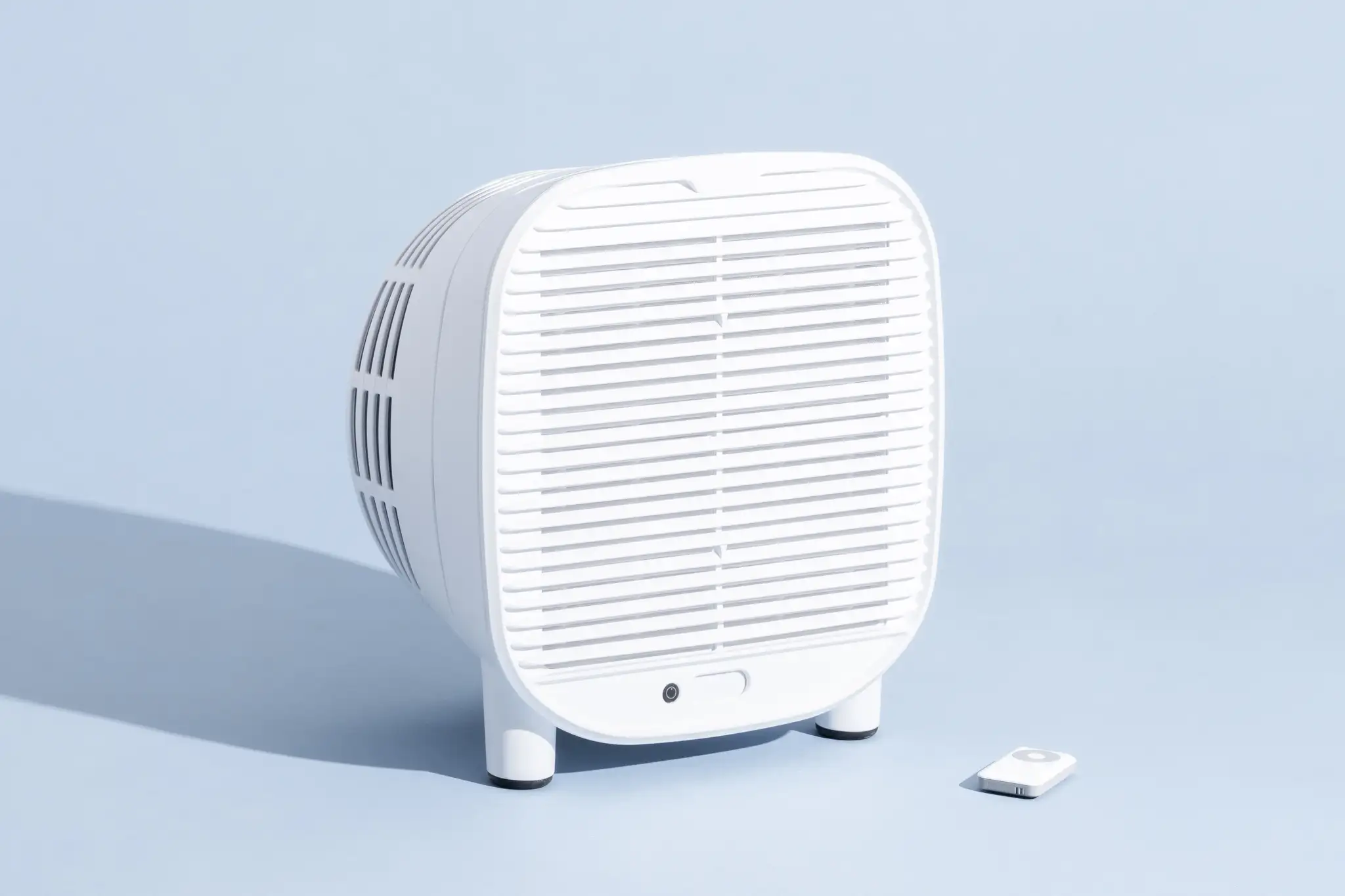
The Airdog X3 uses a filtration method called Two-pole Active Filtration, or TPA, a patented electrostatic approach that charges incoming particles and then traps them on collecting plates. The plates are the filter. When they’re dirty, you wash them with soap and water. There are no cartridges to buy, no schedule of replacements to follow, and no consumable costs beyond electricity. That keeps maintenance costs low, with electricity costs as the main ongoing expense.
What sets TPA apart from conventional filtration is the particle size it targets. Standard HEPA filters capture particles down to 0.3 microns at 99.97% efficiency. The Airdog X3 captures particles down to 0.0146 microns, roughly 14.6 nanometers, which puts it well into the ultrafine particle range. That includes viruses, fine smoke particles, and submicron chemical aerosols that pass through HEPA media entirely.
Coverage is rated at up to 215 square feet at four air changes per hour, which is the zone where filtration is actually doing meaningful work on your air quality. In practical terms, that reflects the cubic feet of air the unit can move while still delivering clean air in the recommended room size. At a single air change per hour, the unit can technically handle 942 square feet, but that’s not a useful operating mode for rooms with active pollution sources. For a bedroom, home office, or nursery, the 215-square-foot recommendation is the right target.
The X3 runs at 22 decibels in sleep mode, quiet enough to ignore. It connects to a smartphone app for remote control and air quality monitoring, and an onboard AQI sensor feeds an auto mode that adjusts fan speed based on what it detects in real time, which helps with quiet operation and gives you a clear sense of how much noise it makes at low settings versus high speeds. The unit includes a child lock and automatically powers off when the rear covers are removed, which matters for households with young children.
The X3 is a genuinely zero-cost-to-run option after purchase. The collecting plates and composite catalyst are both washable and reusable for the life of the unit.
Coverage: up to 215 sq ft (4 ACH) | Filter type: TPA electrostatic collecting plates, washable | Noise: 22 dB (sleep) | Smart app: yes
Honeywell AirGenius 5 Air Purifier (HFD320)
The Honeywell AirGenius 5 uses ifD filtration, which stands for Intense Field Dielectric. It’s an electrostatic technology that charges particles as they pass through the filter medium, then traps them on a permanent, washable polymer surface rather than a disposable fiber mat. Among Honeywell air purifiers, this air cleaner stands out because the washable main filter cuts down on recurring replacement filters. The filter doesn’t clog the way paper or glass-fiber HEPA filters do, which keeps airflow consistent over time and supports effective air filtration. Honeywell rates capture efficiency at 99.9% for particles 0.3 microns and larger from the air that passes through the filter.
What makes the AirGenius 5 stand out in this category is room coverage. AHAM-verified performance at 250 square feet covers medium rooms such as a standard master bedroom, a home office with room to spare, or a smaller open-plan living area. It also has a clean air delivery rate of 161 CFM, which helps explain its practical output in medium-sized rooms. Amazon listings cite up to 1,200 square feet for less intensive cycling, though the 250-square-foot figure is where the unit delivers consistent four to five air changes per hour and dependable clean air for indoor air use.
The tower form factor takes up very little floor space, which is genuinely useful in rooms where a box-style unit would sit awkwardly. It circulates air in the recommended room size approximately every 12.5 minutes at the primary cleaning setting.
The control panel offers five operating modes: Sleep, Germ, General, Allergen, and Max. Sleep mode supports quiet operation, making it usable in bedrooms without the fan noise becoming an issue. The unit earned an Energy Star rating and operates on roughly the same power draw as a standard incandescent light bulb at most speeds, with solid energy efficiency and lower energy consumption on low settings. That makes it a notably energy-efficient option if you care about long-run operating costs as much as performance.
The washable ifD filter is a permanent component. Honeywell recommends cleaning it every 1 to 3 months, and you should check the filter manually even if the indicator is off. The unit also ships with a foam pre-filter and includes an odor-reducing carbon pre-filter for VOC and smoke odor reduction, both of which are also washable. There are no mandatory filter replacements on a normal maintenance schedule, though performance will still depend on routine care rather than waiting for new filters.
The AirGenius 5 has been a consistent recommendation in the washable filter category for years, and the ifD technology has continued to earn strong marks in independent testing. The 60-decibel max fan speed on the highest setting is the one legitimate limitation, but the noise levels are much easier to live with at lower speeds and well within a comfortable range for occupied rooms.
Coverage: up to 250 sq ft (4.8 ACH) | Filter type: permanent ifD washable filter | Noise: near-silent (Sleep) to 60 dB (Max) | ENERGY STAR: yes
Nuwave Forever Smart Air Purifier
The Nuwave Forever takes a different approach than the other units on this list. Rather than a single washable filter element or a pair of electrostatic plates, it runs incoming air through seven distinct filter stages, all of which are washable and reusable. That means no scheduled replacements, no consumable costs, and no situation where one mandatory filter element invalidates the “washable” claim.
The seven-stage system includes stainless steel pre-filters that catch large particles, pet hair, and larger debris, Bio-Guard filter layers, and additional stages targeting VOCs, formaldehyde, bacteria, and ultrafine particulates down to 0.1 microns. Intertek laboratory testing certified 100% removal of particles at the 0.1-micron threshold, which covers fine smoke, pollen, and most bacteria. Independent testing also confirmed 99.99% removal of airborne H3N2 influenza virus and 99.98% removal of airborne E. coli. It also addresses volatile organic compounds through dedicated stages built for VOC removal, not just particle capture.
The coverage footprint is the most significant differentiator on this list. The Nuwave Forever is rated to purify up to 2,002 square feet in one hour, making it a better fit for large rooms and whole-home use. For a large open-plan living area, a finished basement, or a situation where one unit needs to handle a substantial portion of a home’s square footage, nothing else on this list comes close.
The unit is physically larger than a compact bedroom purifier and sits on built-in wheels with handles, so repositioning it between rooms is practical rather than awkward. The adjustable flow panel angles at 30, 60, and 90 degrees, letting you direct cleaned air toward the areas of the room where people are actually seated or sleeping.
Smart connectivity runs through a WiFi-enabled app that allows remote monitoring and control. Dual onboard sensors track air quality in real time and feed an automatic mode that adjusts fan speed without intervention. Nighttime mode turns off indicator lights and drops fan speed to the quietest operating level for uninterrupted sleep. Its energy efficiency matters most on low settings, since energy consumption rises more noticeably at high speeds, given the unit’s large airflow capacity.
CARB compliance is certified, with ozone output reduced to 1 part per billion during operation. For households in California or for anyone with respiratory sensitivities, that certification carries weight.
Coverage: up to 2,002 sq ft | Filter type: 7-stage fully washable and reusable | Smart app: yes | Certifications: Intertek, FCC, ETL, CARB-compliant
Winix 5500-2 Air Purifier
A note before the specs: the Winix 5500-2 has been discontinued by Winix and replaced by the Winix 5510, which adds WiFi connectivity and a slightly higher CADR. If you find the 5500-2 in stock from a retailer, it remains a strong buy at its current clearance pricing. If you’re buying new from Winix directly, the 5510 is the current equivalent.
The 5500-2 uses a four-stage filtration system that combines a washable mesh pre-filter, a washable activated carbon filter, a True HEPA layer, and Winix’s PlasmaWave technology. The pre-filter and carbon filter are both washable indefinitely. The HEPA filter is not washable and requires annual replacement at roughly $30 to $50, depending on the source.
This is a meaningful distinction from the other three units on this list. The Winix 5500-2 does not offer fully washable filtration. It offers washable pre-filtration with a replaceable HEPA core. For buyers specifically trying to eliminate all filter replacement costs, that matters. For buyers who want the verified particle capture performance of True HEPA and are willing to manage a once-a-year filter swap, the 5500-2 delivers strong value.
AHAM-verified CADR ratings are 243 for dust, 232 for smoke, and 246 for pollen. The unit is certified to cover rooms up to 360 square feet at 4.8 air changes per hour. Independent testing at HouseFresh and Air Purifier First both confirmed performance consistent with those ratings.
PlasmaWave technology creates hydroxyl radicals that neutralize viruses, bacteria, and VOCs at a molecular level. Winix states PlasmaWave operates below 5 parts per billion of ozone output, well under CARB’s 50 ppb safety threshold. Users with ozone sensitivity can disable PlasmaWave with a dedicated button and run the unit on HEPA filtration alone with no performance penalty on particle capture.
The activated carbon layer uses genuine carbon granules rather than carbon-impregnated fabric, which produces better odor absorption. Cooking smells, pet odor, and tobacco smoke are all well within its range.
Auto mode adjusts fan speed based on the onboard air quality sensor. Sleep mode drops to 27.8 decibels, quiet enough for most people to sleep through. A remote control is included in the box. The unit is ENERGY STAR certified and runs between 6W and 65W, depending on fan speed.
Coverage: up to 360 sq ft (4.8 ACH) | Filter type: washable pre-filter + washable carbon + replaceable True HEPA | CADR: 243 dust / 232 smoke / 246 pollen | Smart features: auto mode, sleep mode, remote control
What to Know Before You Buy
Washable filters fall into a few distinct categories, and understanding which category a unit falls into matters for long-term costs.
Fully washable units, including the Airdog X3, Honeywell AirGenius 5, and Nuwave Forever, have no mandatory replacement parts. Maintenance is periodic cleaning. That’s genuinely zero consumable cost after purchase.
Hybrid units like the Winix 5500-2 have washable pre-filters and carbon stages, but still require an annual HEPA replacement. The ongoing cost is low, roughly $30 to $50 per year, but it’s not zero.
Room coverage ratings also require context. AHAM-verified CADR ratings at a standard 4 to 5 air changes per hour are the reliable figure to use. Manufacturer maximum coverage claims at 1 to 2 air changes per hour are technically accurate, but describe a level of air cycling that doesn’t provide meaningful real-time purification for rooms with active pollution sources.
For rooms with smoke, pet dander, or high pollen load, match the unit’s AHAM-verified coverage area to the room size rather than the maximum coverage figure.
Frequently Asked Questions
Are washable filter air purifiers as effective as HEPA models?
It depends on the technology. Airdog’s TPA electrostatic plates capture particles down to 0.0146 microns, significantly smaller than the 0.3-micron HEPA standard, while using a different air filtration approach than mechanical filtration. Honeywell’s ifD filter captures 99.9% of particles 0.3 microns and larger. The Nuwave Forever is Intertek-certified at 0.1 microns. Effectiveness varies by model, but the best washable filter units can deliver clean air at or above HEPA-level efficiency on particle capture, and the most useful comparison points are clean air delivery rate and smoke CADR, not just filter claims. A true HEPA filter is generally replaceable rather than washable. HEPA grade claims vary, so verified room coverage and CADR are better comparison points than filter labels alone. For context, other air purifiers often cite metrics like the Coway Airmega 100 at 148 cfm, the Airmega 350 for up to 528 sq. ft., the Blueair Blue Pure 211i Max for up to 750 sq. ft., or the Coway Airmega Mighty2 at 99.8% CADR.
How often do washable filters need to be cleaned?
Most manufacturers recommend cleaning every two to four weeks for pre-filters and every 1 to 3 months for washable primary filter elements, depending on usage and air quality conditions. Washable filters require periodic washing to maintain efficiency. Units in high-traffic households or homes with pets may require more frequent cleaning, and some models may still use replacement filters or separate filter replacements after the washable stage. With proper care, many systems only need new filters occasionally because washable elements often last up to five years, and in some cases 5 to 10 years, but you should still check filters manually even if the cleaning indicator is off.
Do washable filter air purifiers produce ozone?
TPA and ifD technologies do not produce ozone as part of their air filtration process. When present, an ionizing function is separate from passive filtration and should be user-controllable. PlasmaWave in the Winix 5500-2 produces trace amounts below 5 ppb, well under CARB’s 50 ppb safety limit, and can be disabled entirely if preferred; when turned on, this ionizing function may help improve clean air output, but users who prefer it off can leave it disabled.
Can a washable filter air purifier handle wildfire smoke?
Units with fine particle capture capability, particularly the Airdog X3, Nuwave Forever, and Winix 5500-2, are effective against smoke particles, including the fine PM2.5 range associated with wildfire smoke and cigarette smoke, but wildfire smoke also contains airborne particles and gases, so models focused only on particulate matter may do less for pet odors or broader VOC removal. Pairing the right unit to the room size is critical during high-smoke events, since air changes per hour drop significantly in rooms larger than the AHAM-rated coverage area. For smoke smell and volatile organic compounds, activated carbon filters matter, and the Austin Air HealthMate is a useful benchmark with 15 lbs of carbon.
