

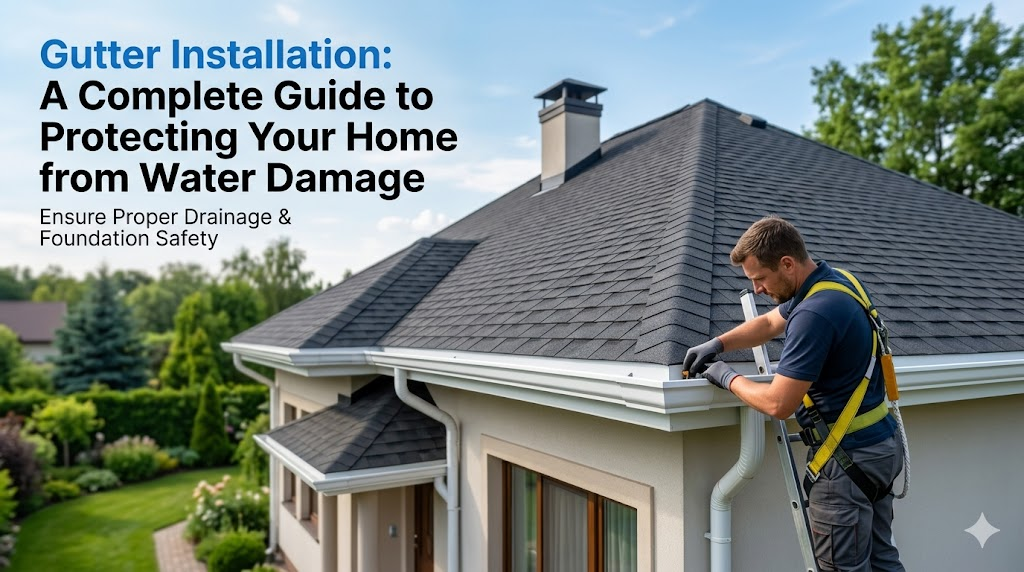
Gutter installation is an essential part of maintaining a home’s structural health and long-term durability. Although gutters are often overlooked compared to roofing or siding, they serve a vital purpose: directing rainwater away from the building. Without a properly installed gutter system, water from the roof can accumulate around the foundation, damage landscaping, stain exterior walls, and eventually compromise the structural stability of the home.
When rain falls on a roof, it must be controlled and redirected efficiently. A well-designed gutter system captures this water and channels it through downspouts to a safe drainage area away from the property. Proper gutter installation not only protects the building but also helps preserve the surrounding environment, including lawns, gardens, and walkways.
For homeowners, understanding how gutter systems work, the different types available, and the correct installation process can help prevent costly repairs in the future. This comprehensive guide explains everything you need to know about gutter installation, including materials, design considerations, installation steps, and maintenance practices.
What Is Gutter Installation?
Gutter installation is the process of attaching a drainage system along the edge of a roof to collect rainwater and move it away from the structure. The system typically consists of horizontal channels called gutters and vertical pipes known as downspouts.
These components work together to control the flow of rainwater. Instead of water pouring directly off the roof and hitting the ground near the foundation, gutters capture the runoff and guide it through a controlled pathway.
A typical gutter system includes:
- Gutters mounted along the roofline
- Downspouts that carry water vertically to the ground
- Hangers or brackets that support the gutter
- End caps to close off the gutter ends
- Elbows and connectors to guide water flow
- Splash blocks or drainage extensions to move water away from the house
During gutter installation, each component must be carefully positioned and secured to ensure proper drainage. Even a small misalignment can cause water to overflow, leak, or collect in unwanted areas.
Why Gutter Installation Is Important for Every Home
Many homeowners underestimate the role gutters play in protecting their property. However, effective gutter installation provides multiple layers of protection for the home and its surroundings.
Protecting the Foundation
One of the most important functions of gutters is protecting the home’s foundation. When rainwater falls directly from the roof onto the ground, it can saturate the soil surrounding the foundation. Over time, this moisture can lead to soil movement, cracks in the foundation, and even basement flooding.
By directing water several feet away from the home, gutters reduce the risk of foundation damage.
Preventing Roof and Fascia Damage
Without gutters, rainwater runs along the edge of the roof and can seep beneath roofing materials. This constant moisture exposure can damage the fascia boards and cause wood rot. Proper gutter installation captures rainwater before it reaches vulnerable roof components.
Protecting Exterior Walls and Paint
Rainwater cascading off the roof can splash against the exterior walls of the house. Over time, this can cause paint to peel, siding to warp, and stains to develop on brick or stucco surfaces. Gutters minimize these issues by controlling the direction of water flow.
Preserving Landscaping
Heavy rain runoff can erode soil and damage landscaping. Flower beds, grass, and decorative elements can be washed away by uncontrolled roof drainage. A well-installed gutter system helps maintain the appearance and stability of the surrounding landscape.
Preventing Basement Flooding
Homes with basements or crawl spaces are particularly vulnerable to water accumulation around the foundation. Gutter installation helps prevent water from pooling near basement walls, reducing the risk of leaks and mold growth.
Types of Gutters Used in Gutter Installation
Choosing the right type of gutter is an important step in the installation process. Different gutter designs offer varying levels of efficiency, durability, and visual appeal.
K-Style Gutters
K-style gutters are the most commonly used gutters in residential construction. They have a flat back and a decorative front shape that resembles crown molding.
These gutters are popular because they:
- Hold a large amount of water
- Provide strong structural support
- Complement many modern home designs
K-style gutters are usually made from aluminum or vinyl and are suitable for most climates.
Half-Round Gutters
Half-round gutters have a smooth semicircular shape. They are commonly used on older homes or buildings with traditional architecture.
Their curved design allows water to flow smoothly through the channel, reducing the buildup of debris. However, they typically require additional brackets and may be more expensive to install.
Box Gutters
Box gutters are larger and often built directly into the structure of commercial buildings or large homes. They are designed to handle heavy rainfall and large roof surfaces.
Because of their size and structural integration, box gutters usually require professional installation.
Seamless Gutters
Seamless gutters are custom-made from a continuous piece of material. Unlike sectional gutters, they have very few joints or seams.
This design reduces the risk of leaks and gives the gutter system a cleaner appearance. Seamless gutter installation is typically performed by professionals using specialized equipment.
Materials Used in Gutter Installation
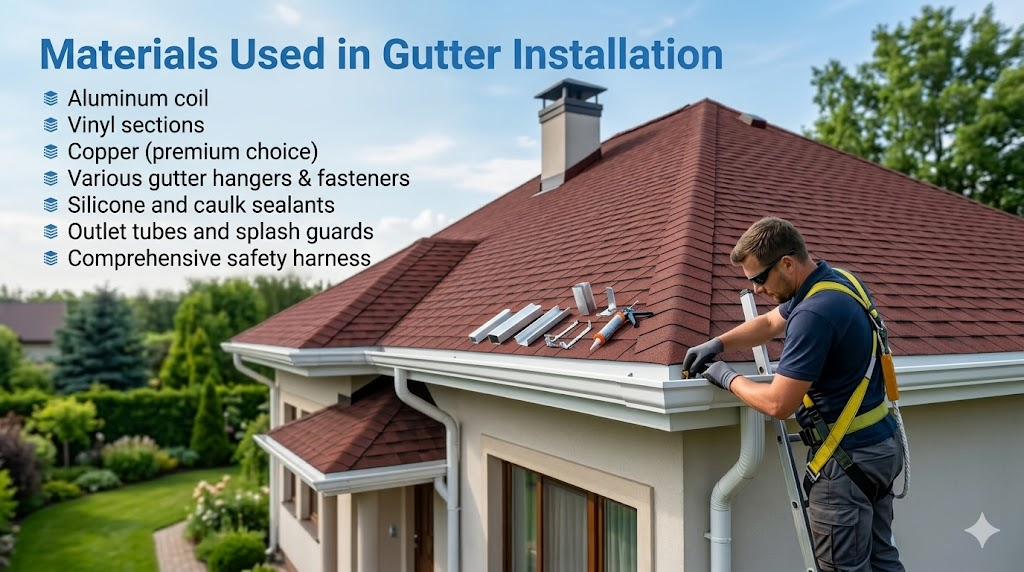
The material used in gutter installation affects durability, cost, maintenance, and appearance. Several options are available depending on the homeowner’s budget and climate conditions.
Aluminum Gutters
Aluminum is the most widely used gutter material. It is lightweight, resistant to rust, and relatively affordable. Aluminum gutters are available in many colors, making them easy to match with the exterior of a home.
They are also durable enough to withstand most weather conditions.
Vinyl Gutters
Vinyl gutters are one of the most budget-friendly options available. They are easy to install and require minimal tools, which makes them popular for DIY gutter installation.
However, vinyl gutters may crack in extremely cold temperatures or warp under intense heat.
Steel Gutters
Steel gutters are known for their strength and durability. They can withstand heavy rain, snow, and strong winds better than many other materials.
The main disadvantage of steel is its susceptibility to rust if the protective coating becomes damaged.
Copper Gutters
Copper gutters are considered a premium choice in gutter installation. They are highly durable and can last for several decades with proper maintenance.
Over time, copper develops a natural patina that gives homes a distinctive and elegant appearance. However, copper gutters are significantly more expensive than other options.
The Gutter Installation Process
Installing gutters requires careful planning and precise measurements. A proper installation ensures that the system will function effectively for many years.
Planning and Measurement
The first step in gutter installation is evaluating the roofline and determining the best placement for gutters and downspouts. Accurate measurements ensure the gutters fit the home correctly.
Installers also determine the number of downspouts needed based on the roof area.
Marking the Gutter Slope
Gutters must be installed with a slight slope to allow water to flow toward the downspouts. Typically, the slope is about a quarter inch for every ten feet of gutter.
This slope ensures efficient drainage without being visible from the ground.
Installing the Hangers
Hangers or brackets are attached to the fascia board to support the gutter system. These supports are usually placed every two to three feet to prevent sagging.
Proper spacing is crucial because gutters must hold the weight of both water and debris.
Attaching the Gutters
Once the hangers are in place, the gutter sections are attached and aligned along the marked slope. Seams are sealed to prevent leaks, and end caps are installed to close off the system.
Installing Downspouts
Downspouts are connected to outlets in the gutters and run vertically down the exterior wall. They carry water from the roof to the ground.
Extensions or splash blocks are often added at the bottom of downspouts to move water farther away from the foundation.
Testing the System
After installation, the system is tested by running water through the gutters. This step ensures that water flows smoothly and drains properly through the downspouts.
DIY vs Professional Gutter Installation
Homeowners sometimes consider installing gutters themselves, especially when working with vinyl or sectional systems.
DIY Installation
DIY gutter installation can reduce costs, but it requires ladders, safety equipment, and basic construction skills. Mistakes in slope, spacing, or sealing can lead to leaks and poor drainage.
For small homes with simple rooflines, DIY installation may be manageable.
Professional Installation
Professional installers have the experience and tools necessary to install gutters safely and accurately. They can also custom-fit seamless gutters and identify potential drainage issues.
For larger homes, complex roof structures, or high roofs, professional gutter installation is usually the safest and most reliable option.
Common Gutter Installation Mistakes
Improper gutter installation can create long-term problems. Some of the most common mistakes include:
- Installing gutters with insufficient slope
- Using too few downspouts
- Placing brackets too far apart
- Failing to seal joints properly
- Directing downspouts too close to the foundation
Avoiding these mistakes is essential for ensuring the gutter system performs as intended.
Maintaining Gutters After Installation
Even the best gutter installation requires regular maintenance. Without proper care, gutters can become clogged or damaged over time.
Regular Cleaning
Leaves, twigs, and debris can block gutters and prevent water from flowing freely. Cleaning the gutters at least twice a year helps maintain proper drainage.
Inspecting for Damage
Homeowners should inspect their gutter systems periodically for cracks, leaks, or loose brackets. Addressing small issues early can prevent major repairs.
Installing Gutter Guards
Gutter guards help prevent debris from entering the system. While they do not eliminate maintenance entirely, they can significantly reduce the frequency of cleaning.
Signs You May Need New Gutter Installation
Over time, gutter systems can deteriorate and require replacement. Some common warning signs include:
- Water overflowing during rainfall
- Visible sagging or separation from the roofline
- Rust, cracks, or holes in the gutters
- Water pooling around the foundation
- Peeling paint or water stains on exterior walls
When these issues become frequent, new gutter installation may be the most effective solution.
Conclusion
Gutter installation is a critical component of protecting a home from water damage. By capturing rainwater and directing it away from the structure, gutters safeguard the roof, foundation, walls, and landscaping from costly problems.
Choosing the right gutter type and material, ensuring proper installation, and performing regular maintenance are essential steps in maintaining an effective drainage system. Whether installed by professionals or completed as a DIY project, a properly designed gutter system provides long-term protection and peace of mind.
Investing in quality gutter installation not only preserves the structural integrity of a home but also helps maintain its value and appearance for many years to come.
