

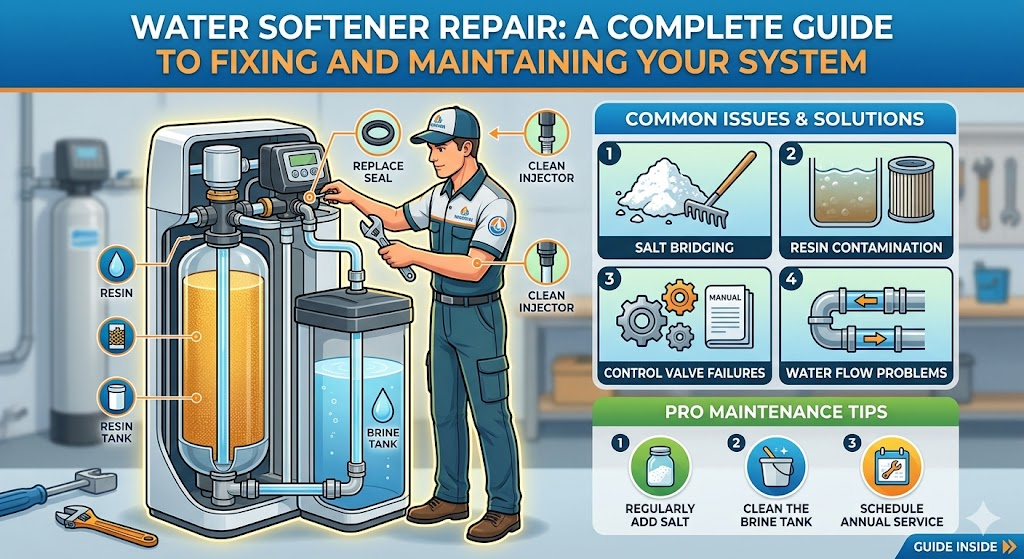
Water Softener Repair is a common problem in many homes, causing mineral buildup in plumbing, reducing appliance efficiency, and leaving stains on fixtures and dishes. A water softener solves this problem by removing hardness minerals such as calcium and magnesium. However, like any household system, water softeners can develop issues over time. When this happens, proper water softener repair becomes essential to restore performance and maintain a consistent supply of soft water.
Understanding how water softeners work, recognizing common problems, and knowing how to fix them can save homeowners significant time and money. This comprehensive guide explains the causes of water softener failures, practical repair methods, and the best maintenance practices to keep the system running efficiently for years.
Understanding the Role of a Water Softener
Before discussing water softener repair, it is helpful to understand what the system does and why it matters.
Hard water contains high levels of dissolved minerals, mainly calcium and magnesium. These minerals cause scale buildup inside pipes, water heaters, dishwashers, and washing machines. Over time, this buildup reduces efficiency and shortens the lifespan of appliances.
A water softener removes these minerals through a process called ion exchange. Inside the unit is a resin tank filled with small beads that attract and capture hardness minerals. When hard water flows through the tank, calcium and magnesium attach to the resin beads while sodium ions are released into the water.
Eventually, the resin beads become saturated with minerals. The system then goes through a regeneration cycle that flushes the minerals away using a salt solution stored in the brine tank. This restores the resin’s ability to soften water.
When any part of this process stops functioning properly, water softener repair becomes necessary.
Common Signs Your System Needs Water Softener Repair
Water softeners usually show warning signs before they stop working completely. Recognizing these early symptoms can help homeowners address problems quickly.
Hard Water Problems Returning
One of the most obvious indicators is the return of hard water symptoms. These may include soap that does not lather properly, mineral stains on dishes, and buildup on faucets or showerheads. If these issues appear again, the softener may not be removing minerals effectively.
Salt Not Being Used
If the salt level in the brine tank remains the same for weeks or months, the system may not be drawing salt during regeneration. This often indicates a blockage, salt bridge, or malfunction in the brine system.
Low Water Pressure
A drop in water pressure can occur when mineral deposits clog valves or internal passages within the softener. In such cases, cleaning or repairing components can restore normal flow.
Strange Noises or Continuous Operation
Unusual sounds such as grinding, humming, or constant running may indicate mechanical issues with motors or internal gears. These problems often require more detailed water softener repair.
Water Tastes Different
If softened water suddenly tastes unusual or salty, it could indicate incorrect regeneration settings or problems with the brine system.
Recognizing these warning signs early allows homeowners to fix problems before the system stops working entirely.
Most Common Water Softener Problems
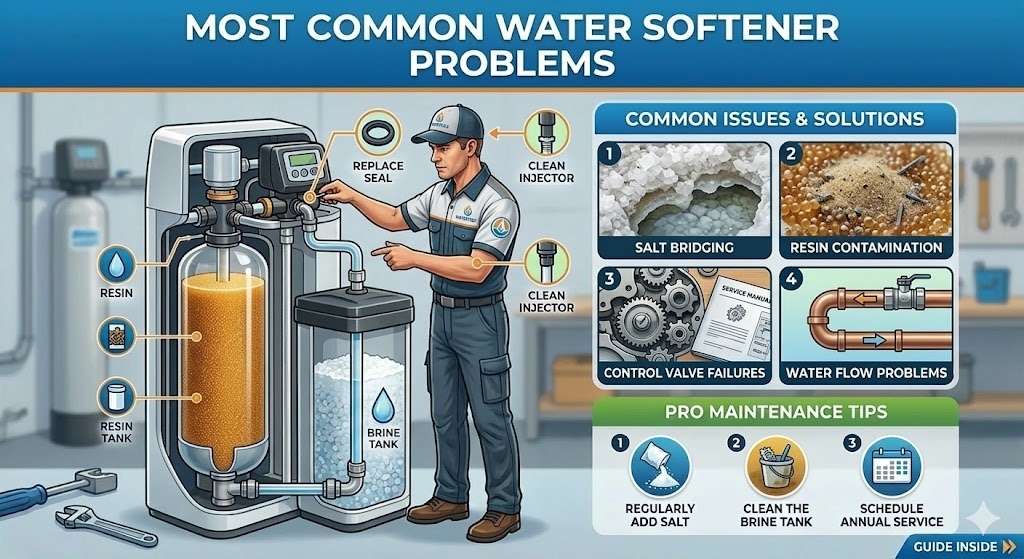
Many issues that require water softener repair are relatively simple and can often be fixed with basic maintenance.
Salt Bridges
A salt bridge is a hardened crust that forms in the brine tank above the water line. This crust prevents salt from dissolving properly, which stops the regeneration process.
Although the tank may appear full of salt, the system cannot create the brine solution needed to recharge the resin beads. As a result, the water softener stops removing minerals.
Salt bridges typically form because of humidity, low-quality salt, or improper storage conditions.
Salt Mushing
Salt mushing occurs when dissolved salt settles at the bottom of the tank and forms a thick sludge. This sludge blocks water flow and interferes with the system’s ability to produce brine.
Using low-quality salt or overfilling the tank can increase the risk of salt mushing.
Resin Bed Fouling
The resin beads inside the softener can become coated with iron, sediment, or organic materials. When this happens, they lose their ability to capture hardness minerals effectively.
Fouled resin beds reduce the efficiency of the system and may eventually require cleaning or replacement.
Clogged Injectors and Valves
Water softeners rely on small injectors and valves to control the regeneration cycle. Over time, mineral deposits or debris can clog these parts.
When injectors become blocked, the system cannot draw brine properly during regeneration, which results in hard water.
Malfunctioning Control Valves
The control valve manages the regeneration cycle and water flow through the softener. If it fails, the system may regenerate at the wrong time or not regenerate at all.
Control valve problems are one of the more complex water softener repair issues and may require professional service.
Step-by-Step Water Softener Repair Methods
Many water softener issues can be fixed with careful troubleshooting and basic tools.
Breaking a Salt Bridge
If a salt bridge is present, it must be broken to restore normal operation.
Start by gently tapping the salt crust using a broom handle or similar tool. Once the crust breaks, remove loose chunks of salt and refill the tank with fresh salt pellets.
This simple water softener repair often resolves regeneration problems.
Cleaning the Brine Tank
If salt mushing is present, the tank should be cleaned.
First, empty the tank and remove the sludge at the bottom. Rinse the tank thoroughly with warm water and allow it to dry before refilling it with new salt.
Cleaning the brine tank helps prevent future blockages and ensures proper brine production.
Cleaning the Venturi Valve
The venturi valve is responsible for drawing brine from the tank during regeneration.
To clean it, remove the valve assembly and rinse it with warm water to remove mineral deposits. A small brush can help remove stubborn buildup.
Regular cleaning of the venturi valve is an important part of water softener repair and maintenance.
Running a Manual Regeneration Cycle
Sometimes the system simply needs to complete a full regeneration cycle to restore performance.
Most water softeners allow homeowners to start this process manually through the control panel. Running a manual cycle flushes the resin bed and resets the system.
Replacing Resin Beads
If the resin beads are severely worn or contaminated, they may need replacement. Resin typically lasts between 10 and 15 years, depending on water quality and system usage.
Replacing the resin restores the system’s ability to remove hardness minerals effectively.
Inspecting and Replacing Seals
Leaks and poor water flow often occur because of worn seals or damaged O-rings.
Replacing these small components is a common water softener repair task and can significantly improve system performance.
Preventive Maintenance to Avoid Frequent Repairs
Preventive maintenance is the most effective way to reduce the need for water softener repair.
Maintain Proper Salt Levels
The brine tank should never run completely empty. Keeping it at least one-third full ensures the system can regenerate properly.
Use High-Quality Salt
High-purity salt pellets produce less sediment and reduce the risk of salt mushing.
Clean the System Periodically
Cleaning the brine tank and internal components once or twice a year prevents buildup that could interfere with operation.
Test Water Hardness
Regularly testing water hardness helps confirm that the system is working properly. If hardness levels begin to rise, the softener may require maintenance or repair.
Schedule Professional Servicing
Even with proper maintenance, professional inspections are beneficial. A technician can identify hidden issues and perform adjustments that homeowners might overlook.
When Professional Water Softener Repair Is Necessary
While many minor issues can be fixed at home, certain situations require professional expertise.
A technician should be contacted if:
- The system leaks from internal components
- Electrical controls malfunction
- Motors or gears fail
- The control valve stops functioning
Professional technicians have specialized tools and experience to diagnose complex problems safely.
Attempting advanced repairs without proper knowledge can cause additional damage.
Water Softener Repair vs Replacement
In some cases, replacing the system may be more practical than repairing it.
Most water softeners last between 10 and 15 years. If the unit is approaching the end of its lifespan and requires major repairs, replacing it may be the better investment.
Newer water softeners are more efficient and often use less salt and water during regeneration. They also include digital controls that improve performance and convenience.
However, if the system is relatively new, professional water softener repair is usually far more cost-effective than replacement.
Benefits of Maintaining a Functional Water Softener
Maintaining a properly functioning water softener provides numerous advantages.
Soft water protects plumbing systems by preventing scale buildup inside pipes. It also improves the efficiency of appliances such as water heaters and washing machines.
In addition, soft water helps soaps and detergents work more effectively, which leads to cleaner dishes, softer laundry, and smoother skin and hair.
Regular maintenance and timely water softener repair ensure these benefits continue for many years.
Conclusion
A water softener is an essential system for homes dealing with hard water. When issues arise, timely water softener repair helps restore performance and prevents damage to plumbing and appliances.
Many common problems, such as salt bridges, clogged valves, and resin fouling, can be resolved with simple troubleshooting and maintenance. Regular cleaning, proper salt management, and routine inspections can significantly reduce the need for major repairs.
For more complex mechanical or electrical issues, professional water softener repair ensures the system operates safely and efficiently.
By understanding how water softeners work and addressing problems early, homeowners can extend the life of their systems, maintain high-quality water, and avoid unnecessary replacement costs.
