

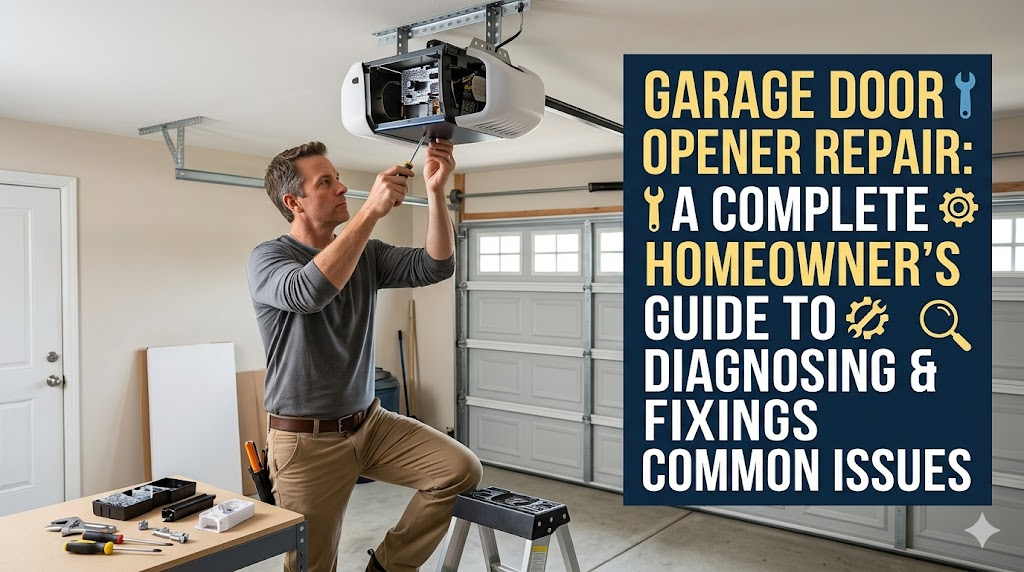
A malfunctioning Garage Door Opener Repair can quickly turn a convenient daily routine into a frustrating problem. Whether your door refuses to open, closes halfway, or makes unusual noises, these issues usually point to a mechanical or electrical fault within the system. Understanding garage door opener repair helps homeowners identify problems early, prevent costly damage, and maintain a safe and reliable garage door system.
Garage doors are among the largest moving components in any home. Because they operate several times a day, the opener system experiences constant wear and tear. Over time, components such as gears, motors, sensors, and drive mechanisms can degrade or become misaligned. When these problems occur, timely repair is essential not only for convenience but also for safety.
This comprehensive guide explains how garage door opener repair work, the most common problems that require garage door opener repair, troubleshooting methods, maintenance strategies, and situations where professional service is necessary.
Understanding the Garage Door Opener System
Before discussing garage door opener repair, it is important to understand how the system functions. A garage door opener repair is essentially a motorized device designed to automate the opening and closing of the garage door. It works by controlling a mechanical drive system connected to the door.
The typical garage door opener includes several core components:
- Motor unit mounted on the ceiling
- Rail and trolley mechanism
- Drive system (chain, belt, or screw)
- Wall switch control
- Remote control transmitter
- Safety photo-eye sensors
- Emergency release cord
- Door springs and lifting cables
When you press the remote control or wall switch, the motor activates the drive mechanism, which moves the trolley along the rail. This movement pulls the garage door upward to open it or pushes it downward to close it.
Safety sensors installed near the floor create an invisible beam across the doorway. If anything interrupts this beam while the door is closing, the opener automatically reverses the door to prevent accidents.
Because so many parts must function together, even a small malfunction can require garage door opener repair repair.
Common Signs Your Garage Door Opener Needs Repair
garage door opener repair rarely stop working without warning. In most cases, the system shows clear signs of wear or malfunction before complete failure occurs.
Delayed Response
One of the earliest warning signs is a delay between pressing the remote and the door responding. If the opener hesitates or only works intermittently, the issue could involve the motor, remote signal, or electrical connections.
Unusual Noises During Operation
Garage door openers normally operate with a consistent humming sound. Loud grinding, rattling, or squeaking noises often indicate mechanical wear inside the system.
These sounds may come from:
- Worn gears
- Loose hardware
- Dry rollers
- Misaligned tracks
Ignoring these noises can lead to more severe damage and the need for extensive garage door opener repair.
The Door Reverses Before Closing
If your garage door begins closing but suddenly reverses direction, the safety system may be triggered. This problem commonly occurs when the sensors are dirty, blocked, or misaligned.
Remote Control Stops Working
A garage door that operates from the wall switch but not from the remote usually indicates a remote battery issue, signal interference, or lost programming.
Motor Runs but Door Does Not Move
When the opener motor runs but the door remains stationary, the drive system may be disconnected or damaged. In many cases, the trolley mechanism has disengaged from the door.
These symptoms are clear indicators that garage door opener repair is needed.
The Most Common Garage Door Opener Problems
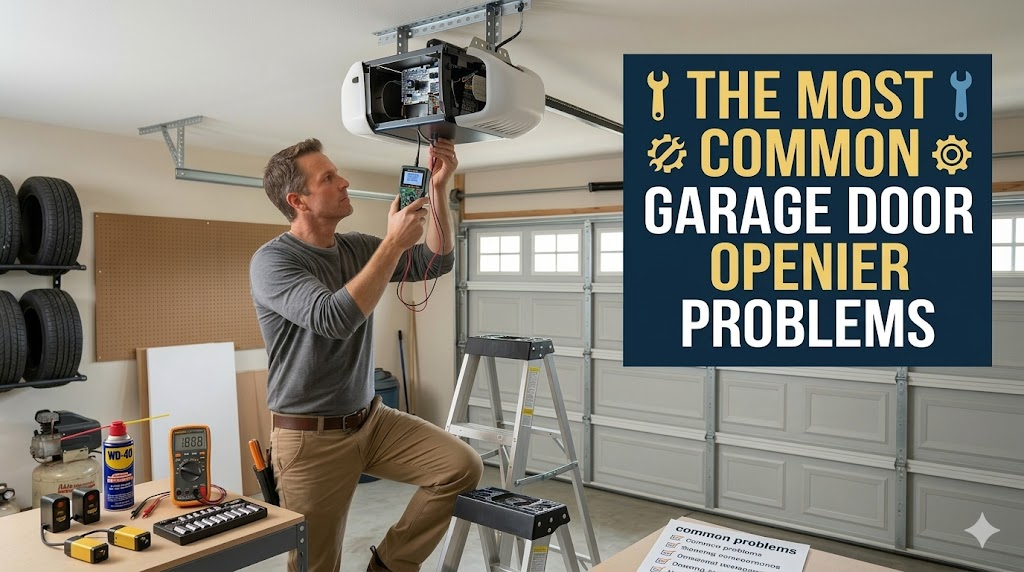
Understanding the most frequent opener issues helps homeowners diagnose problems more efficiently.
Misaligned Safety Sensors
Safety sensors are a critical feature of modern garage door systems. They prevent the door from closing when something is in its path.
If the sensors become misaligned, the opener assumes an obstruction exists and refuses to close the door. Even a small shift in sensor position can disrupt the beam connection.
Cleaning the lenses and adjusting their alignment often resolves this issue quickly.
Dead Remote Batteries
Remote transmitters rely on small batteries that eventually lose power. When the battery weakens, the signal becomes inconsistent or stops working entirely.
Replacing the battery is often the simplest form of garage door opener repair.
Worn Drive Gear
Inside the opener motor housing is a plastic gear that transfers power from the motor to the drive mechanism. Over time, this gear can wear down or strip.
When this happens, the motor may still run but fails to move the door. Replacing the gear typically restores proper function.
Broken Garage Door Springs
Although springs are technically part of the door rather than the opener, they play a crucial role in lifting the door. Springs carry most of the door’s weight.
When a spring breaks, the opener must attempt to lift the entire weight of the door, which can strain the motor and prevent operation.
Spring replacement is one of the most common professional garage door opener repair services.
Disconnected Trolley
Garage doors include an emergency release cord that disconnects the door from the opener during power outages. Sometimes this cord is pulled accidentally, causing the door to operate manually instead of automatically.
Reconnecting the trolley to the opener carriage usually restores normal function.
Obstructed or Damaged Tracks
Garage door tracks guide the door’s movement as it opens and closes. If debris accumulates or the track becomes bent, the door may jam or move unevenly.
Cleaning and adjusting the tracks can prevent further damage and eliminate the need for major garage door opener repair.
Step-by-Step Troubleshooting for Garage Door Opener Repair
Before calling a technician, homeowners can attempt several basic troubleshooting steps.
Check the Power Source
Start by confirming that the opener motor is plugged into the electrical outlet. If the outlet is connected to a circuit breaker, ensure the breaker has not tripped.
A power interruption can make the opener appear broken even when the system is functioning normally.
Inspect the Remote Control
If the opener does not respond to the remote, replace the batteries and try again. If the problem persists, the remote may need reprogramming.
Most garage door openers include a “Learn” button on the motor housing that allows the remote to reconnect with the system.
Examine the Safety Sensors
Look at the sensors near the bottom of the door frame. Make sure both sensors are pointing directly at each other and that no objects are blocking the beam.
Dust or dirt on the lenses can also interfere with the signal.
Test the Wall Switch
If the wall switch operates the door but the remote does not, the problem likely lies with the remote control rather than the opener itself.
Check the Tracks and Rollers
Inspect the tracks for dirt, rust, or dents. Debris inside the track can prevent the door from moving smoothly.
Cleaning the tracks and ensuring the rollers move freely can improve operation.
Lubricate Moving Parts
Proper lubrication is an essential part of garage door maintenance. Apply garage door lubricant to the rollers, hinges, springs, and drive system to reduce friction and noise.
Regular lubrication can significantly extend the lifespan of the opener.
Preventive Maintenance to Avoid Garage Door Opener Repair
Routine maintenance is one of the best ways to prevent unexpected breakdowns.
Perform Regular Visual Inspections
Every few months, check the garage door system for visible wear or damage. Look for loose bolts, worn cables, and misaligned components.
Early detection of these issues can prevent costly repairs.
Test the Safety Reversal Feature
Safety features must function correctly to prevent accidents. Place a small object such as a wooden block in the door’s path and close the door.
If the door contacts the object and fails to reverse, the opener requires immediate adjustment or repair.
Keep the System Clean
Dust, cobwebs, and debris can accumulate around the opener motor and sensors. Cleaning these areas regularly helps maintain proper performance.
Lubricate Annually
Applying lubricant to the moving parts at least once a year keeps the system operating smoothly and reduces strain on the motor.
When to Call a Professional for Garage Door Opener Repair
While many minor issues can be addressed by homeowners, certain problems require professional expertise.
You should contact a garage door specialist if:
- The torsion springs are broken
- The opener motor overheats
- The door becomes severely unbalanced
- Internal gears are stripped
- Electrical components fail
- The door falls quickly when released manually
These repairs involve heavy components under extreme tension and can be dangerous without proper tools and training.
Professional technicians can diagnose the root cause of the problem, replace damaged parts safely, and restore the system to proper working condition.
Repair or Replace: Deciding the Best Option
Sometimes repeated repairs indicate that replacing the opener may be the better long-term solution.
Consider replacement if:
- The opener is over 15 years old
- Repairs occur frequently
- Replacement parts are difficult to find
- The system lacks modern safety features
- The motor struggles to lift the door
Newer garage door openers offer improved efficiency, quieter operation, and advanced technology such as smartphone control and battery backup systems.
Upgrading the opener can improve both convenience and home security.
Why Professional Garage Door Opener Repair Matters
Garage doors are heavy and powerful mechanical systems. Improper repairs can lead to serious injuries or property damage.
Professional technicians bring several advantages:
- Accurate diagnosis of complex problems
- Access to specialized repair tools
- Safe spring tension adjustments
- Correct electrical connections
- Compliance with safety standards
Professional service also ensures that the entire system operates smoothly and reliably after the repair.
Conclusion
A reliable garage door opener is essential for daily convenience, home security, and safe access to your garage. When problems arise, timely garage door opener repair can prevent further damage and restore smooth operation.
By recognizing early warning signs such as unusual noises, delayed response, or sensor issues, homeowners can address small problems before they become major repairs. Basic troubleshooting, routine maintenance, and proper lubrication also play an important role in extending the life of the opener system.
However, complex mechanical or electrical issues should always be handled by trained professionals to ensure safety and proper functionality. With the right care and attention, a garage door opener can provide years of dependable performance while keeping your home secure and accessible.
