
Metal Roof Installation has become one of the most trusted roofing solutions for modern homes and commercial buildings. Known for its durability, energy efficiency, and long lifespan, metal roofing is increasingly chosen by homeowners who want a roof that can withstand harsh weather conditions while requiring minimal maintenance. When properly executed, metal roof installation provides decades of reliable protection and can significantly improve the overall value and performance of a property.
Unlike traditional roofing materials that may require frequent replacement or repairs, metal roofing systems are designed to last for generations. However, the success of any metal roofing system depends largely on proper installation techniques. A well-installed metal roof can resist wind, rain, snow, fire, and extreme temperatures, while a poorly installed system can lead to leaks, structural problems, and premature failure.
This comprehensive guide explains everything you need to know about metal roof installation, including the preparation process, types of metal roofs, installation methods, costs, benefits, and long-term maintenance considerations.
Understanding Metal Roof Installation
Metal roof installation refers to the process of installing metal panels or metal shingles onto a roof structure to create a durable and weather-resistant protective layer. These roofing systems are typically constructed using materials such as steel, aluminum, copper, or zinc.
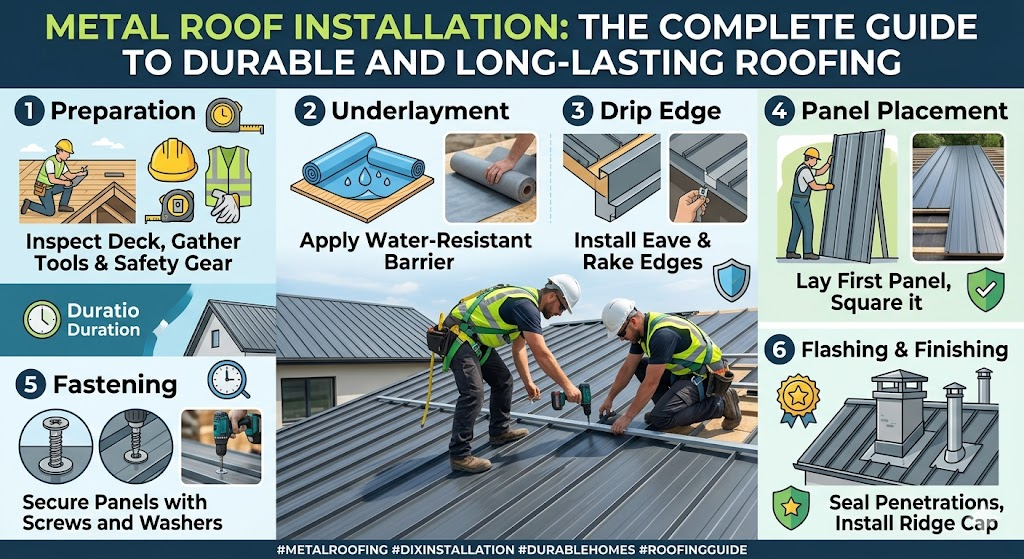
The installation process involves several important stages, including preparing the roof deck, installing protective underlayment, positioning metal panels, securing them with specialized fasteners or clips, and sealing vulnerable areas with flashing and trim components.
Unlike asphalt shingles, which are applied piece by piece, metal roofing panels cover larger sections of the roof. This design improves structural integrity while reducing the number of seams where leaks could potentially occur.
When installed correctly, metal roofing systems provide exceptional protection against moisture penetration, high winds, and UV damage.
Why Homeowners Choose Metal Roof Installation
The growing popularity of metal roofing is largely due to its impressive combination of durability, sustainability, and performance.
One of the biggest advantages of metal roof installation is longevity. Most metal roofs can last between 40 and 70 years depending on the material and environmental conditions. This is significantly longer than traditional roofing materials like asphalt shingles, which often require replacement within two decades.
Another major benefit is weather resistance. Metal roofs are engineered to withstand severe storms, heavy rain, hail, and strong winds. Many metal roofing systems are also fire-resistant, providing an added level of safety for residential structures.
Energy efficiency also makes metal roofs attractive to homeowners. Because metal reflects sunlight rather than absorbing it, buildings stay cooler during hot weather. This reflective property can help reduce air conditioning costs and improve indoor comfort.
Additionally, modern metal roofing systems offer a wide range of design options. Manufacturers produce panels and shingles in numerous colors, textures, and styles, allowing homeowners to match their roof with the architectural style of their home.
Types of Metal Roofing Used in Metal Roof Installation
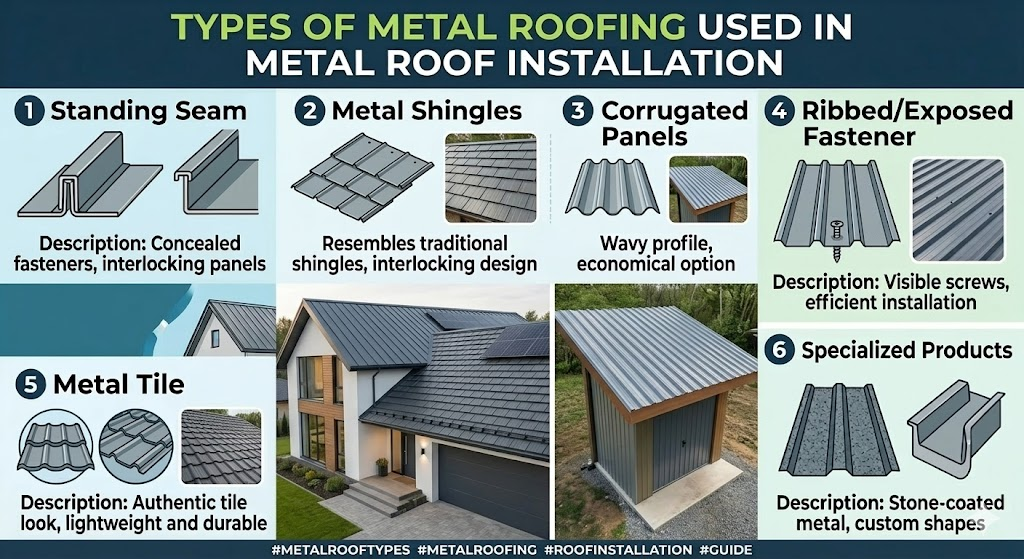
Different types of metal roofing systems are available, and the installation process may vary slightly depending on the design and material used.
Standing Seam Metal Roofing
Standing seam roofing is one of the most advanced and widely used metal roofing systems. It consists of vertical panels with raised seams that interlock along the edges.
The raised seams sit above the flat panel surface, preventing water from reaching the fasteners and improving water resistance. Many standing seam systems use hidden fasteners, which create a cleaner appearance and reduce the risk of leaks.
This type of metal roof installation is known for its sleek modern look and excellent durability.
Corrugated Metal Roofing
Corrugated metal roofing is recognized by its repeating ridges and grooves. This design increases the strength of the metal sheets while allowing water to drain efficiently.
Corrugated panels are typically fastened directly through the surface using screws with rubber washers that create a watertight seal. This type of metal roofing is commonly used on agricultural buildings, warehouses, and residential structures.
Metal Shingle Roofing
Metal shingles are designed to replicate the appearance of traditional roofing materials such as slate, wood shake, or clay tile. They offer the aesthetic appeal of conventional roofing while delivering the durability and longevity of metal.
Metal shingles are installed in overlapping sections, similar to asphalt shingles, but provide far greater resistance to weather damage.
Specialty Metal Roofing Materials
Different metals offer unique characteristics that influence both installation and performance:
Steel is the most commonly used metal for roofing because of its strength and affordability.
Aluminum is lightweight and highly resistant to corrosion, making it ideal for coastal areas.
Copper is extremely durable and develops a distinctive patina over time.
Zinc has self-healing properties that allow scratches to gradually disappear.
The choice of metal material affects both the cost and installation method of the roof.
Preparing for Metal Roof Installation
Proper preparation is critical to the success of any metal roofing project. Before installation begins, several steps must be completed to ensure the roof structure is ready to support the new system.
Roof Inspection
A thorough inspection is conducted to evaluate the condition of the existing roof structure. Contractors examine the roof deck, rafters, and support systems to ensure they are strong enough to support the new roofing materials.
Any signs of rot, mold, or structural damage must be repaired before the installation process begins.
Removing Existing Roofing
In many cases, the old roofing materials are removed to expose the roof deck. This step allows installers to check for hidden damage and create a smooth, stable surface for the metal panels.
In some situations, metal roofs can be installed over existing shingles, but this depends on local building codes and the structural condition of the roof.
Installing Underlayment
Underlayment is a protective barrier installed between the roof deck and the metal panels. It acts as a secondary moisture barrier and improves insulation.
High-quality synthetic underlayment or waterproof membranes are often used in modern metal roof installation projects.
Step-by-Step Metal Roof Installation Process
Although installation methods can vary depending on the type of metal roofing system, most installations follow a similar process.
Measuring and Planning the Roof Layout
Accurate measurements are essential for successful installation. Contractors measure the roof dimensions, including slopes, valleys, and ridges, to determine the number of panels needed.
Proper planning ensures panels align correctly and reduces material waste.
Installing Edge Trim and Drip Edges
Edge trim and drip edges are installed along the perimeter of the roof. These components guide water away from the roof structure and protect vulnerable edges from moisture damage.
They also provide a finished look to the roof.
Applying Underlayment
Once the roof deck is prepared, underlayment is applied across the entire surface. The material is rolled out and secured to create a continuous moisture barrier beneath the metal panels.
Installing Metal Panels
Metal panels are positioned starting from one edge of the roof and progressing across the surface. Each panel overlaps the previous one to create a watertight seal.
Careful alignment is crucial to maintain a uniform appearance and ensure proper drainage.
Securing Panels with Fasteners
Panels are attached to the roof deck using specialized screws or hidden clips. These fasteners are designed to allow slight movement as the metal expands and contracts with temperature changes.
Rubber washers are often used to create waterproof seals around the screws.
Installing Flashing and Seals
Flashing is installed around roof penetrations such as chimneys, vents, skylights, and valleys. This step prevents water from entering vulnerable areas of the roof.
Sealants are applied to reinforce the waterproof barrier.
Installing Ridge Caps and Final Components
Ridge caps are installed along the peak of the roof to cover the seams where panels meet. These caps also allow for ventilation while preventing water infiltration.
After installation is complete, the roof is carefully inspected to ensure all fasteners, seams, and flashing components are properly secured.
Factors That Affect Metal Roof Installation Cost
Several variables influence the total cost of installing a metal roof.
Roof size is one of the primary factors. Larger roofs require more materials and labor.
Roof complexity also affects cost. Roofs with steep slopes, multiple valleys, or dormers require more detailed work.
The type of metal used plays a significant role in pricing. Steel roofs are generally more affordable, while copper and zinc roofs can be considerably more expensive.
Labor costs depend on the experience of the roofing contractor and the complexity of the installation.
Additional materials such as insulation, underlayment upgrades, flashing systems, and ventilation improvements can also affect the final cost.
Although metal roofing may have a higher upfront cost than some alternatives, its durability often makes it more cost-effective in the long term.
Benefits of Professional Metal Roof Installation
Hiring experienced roofing professionals ensures the installation is completed correctly and safely.
Professional installers understand manufacturer specifications and local building codes. They also use specialized tools and techniques to secure panels properly and prevent leaks.
Another advantage is warranty protection. Many metal roofing manufacturers require certified installation in order for warranties to remain valid.
Professional installation also reduces safety risks associated with working at heights and handling heavy roofing materials.
Maintenance After Metal Roof Installation
Metal roofs require relatively little maintenance compared to other roofing materials. However, periodic inspections help ensure the system continues performing well.
Homeowners should check for loose fasteners, damaged sealants, or debris buildup in roof valleys and gutters. Keeping the roof clean and addressing minor issues quickly helps extend its lifespan.
Most metal roofs only require occasional inspections and minimal repairs throughout their service life.
Common Mistakes to Avoid During Metal Roof Installation
Certain mistakes can significantly reduce the performance and lifespan of a metal roof.
Improper fastener placement can lead to leaks and structural issues.
Misaligned panels may affect drainage and create visible gaps.
Skipping underlayment reduces moisture protection.
Poorly installed flashing allows water to penetrate the roof system.
Working with experienced professionals helps prevent these issues and ensures the roof is installed according to industry standards.
Long-Term Value of Metal Roof Installation
The long-term benefits of metal roof installation make it a strong investment for homeowners and property owners. Because metal roofs last significantly longer than most other materials, they reduce the frequency and cost of roof replacement.
Metal roofs can also increase property value due to their durability and modern appearance. In many cases, buyers view a metal roof as a premium feature that improves the overall quality of a home.
Additionally, the energy efficiency of metal roofing can reduce heating and cooling costs over time, providing ongoing financial savings.
Conclusion
Metal roof installation is one of the most effective ways to create a durable, energy-efficient, and long-lasting roofing system. With proper planning, high-quality materials, and professional installation, a metal roof can protect a home or building for decades while requiring minimal maintenance.
From selecting the right type of metal roofing to carefully installing panels, flashing, and ridge components, every step of the process contributes to the roof’s performance and longevity. When installed correctly, metal roofing provides superior resistance to weather, improves energy efficiency, and enhances the overall value of a property.
For homeowners seeking a reliable roofing solution that combines strength, sustainability, and long-term cost savings, metal roof installation remains one of the most dependable choices available today.
