

Sewer line repair systems are one of the most important yet least visible parts of a property’s plumbing infrastructure. Beneath every home or building runs a network of pipes responsible for carrying wastewater safely away from sinks, toilets, showers, and appliances. When this system fails, the consequences can be messy, expensive, and disruptive. That is why understanding sewer line repair is essential for homeowners, property managers, and anyone responsible for maintaining a building.
Sewer line issues rarely appear overnight. In many cases, small problems such as minor blockages or hairline cracks slowly develop into serious structural damage. Early detection and timely repair can prevent costly excavation, structural damage, and potential health hazards. This article explores sewer line repair in depth, covering how sewer systems work, common causes of damage, repair methods, costs, and long-term prevention strategies.
Understanding Sewer Lines and Their Role in Plumbing
A sewer line is the primary pipe that carries wastewater from a building to a municipal sewer system or septic tank. All plumbing fixtures inside a property connect to this single pipe through smaller branch lines. Once wastewater enters the main sewer line, gravity moves it through underground pipes until it reaches a treatment facility or septic system.
Sewer lines are typically buried several feet below ground and may run under lawns, sidewalks, driveways, or building foundations. Because these pipes are hidden underground, problems often go unnoticed until symptoms appear inside the home.
Materials used for sewer lines vary depending on when the property was built. Older homes often have clay, cast iron, or Orangeburg pipes, while newer systems typically use PVC or HDPE materials. Over time, even durable pipes can degrade due to environmental factors, usage patterns, or aging infrastructure.
Common Causes of Sewer Line Damage
Sewer line repair becomes necessary when pipes are damaged, obstructed, or no longer capable of carrying wastewater efficiently. Several factors commonly contribute to sewer line failure.
Tree Root Intrusion
Tree roots naturally grow toward moisture sources, and sewer lines provide an attractive environment. Tiny cracks or loose joints in pipes allow roots to enter and expand inside the line. Over time, roots can create severe blockages and even break pipes apart.
Root intrusion is one of the most common reasons homeowners require sewer line repair, particularly in older neighborhoods with large trees.
Aging Infrastructure
Pipes are not designed to last forever. Clay pipes may crack, cast iron can corrode, and older fiber-based pipes deteriorate over time. As materials weaken, they become more vulnerable to leaks, blockages, and collapse.
Homes built several decades ago often experience sewer line issues simply because the original pipes have reached the end of their lifespan.
Ground Movement
Soil conditions change over time due to weather, erosion, earthquakes, and construction activity. When soil shifts, underground pipes may move or separate at their joints. Even small shifts can cause sections of pipe to sag or misalign, restricting wastewater flow.
Grease and Waste Buildup
Improper disposal of grease, cooking oil, and food waste can cause thick layers of buildup inside sewer pipes. Over time, these deposits harden and narrow the pipe interior, increasing the likelihood of clogs.
Items such as paper towels, wipes, and hygiene products can also accumulate and obstruct sewer lines.
Extreme Temperature Changes
In regions with cold winters, repeated freezing and thawing cycles may stress underground pipes. Expansion and contraction can create cracks that eventually lead to leaks or pipe failure.
Warning Signs That Sewer Line Repair Is Needed
Sewer line problems usually reveal themselves through noticeable warning signs. Recognizing these symptoms early allows homeowners to address issues before they escalate.
Multiple Drain Clogs
A single clogged sink or toilet may simply indicate a localized blockage. However, when multiple drains in the home begin clogging simultaneously, the issue often lies in the main sewer line.
Slow Drains Throughout the Home
If sinks, tubs, and showers all drain slowly at the same time, it may indicate that wastewater is struggling to pass through a partially blocked sewer pipe.
Sewage Backups
One of the clearest signs of sewer line trouble is wastewater backing up into toilets, bathtubs, or floor drains. This situation requires immediate attention because it poses sanitation and health risks.
Persistent Sewer Odors
A strong sewage smell inside or outside the home can indicate a cracked pipe or leaking sewer line. These odors should never be ignored, as they often signal underlying plumbing issues.
Unusual Yard Conditions
Sometimes sewer line problems reveal themselves outdoors. Patches of grass may appear unusually green or grow faster than surrounding areas due to leaking sewage fertilizing the soil. Wet or sunken areas in the yard can also indicate underground leaks.
How Professionals Diagnose Sewer Line Problems

Before performing sewer line repair, plumbing professionals must accurately identify the source and severity of the issue. Modern diagnostic technology allows technicians to examine pipes without extensive digging.
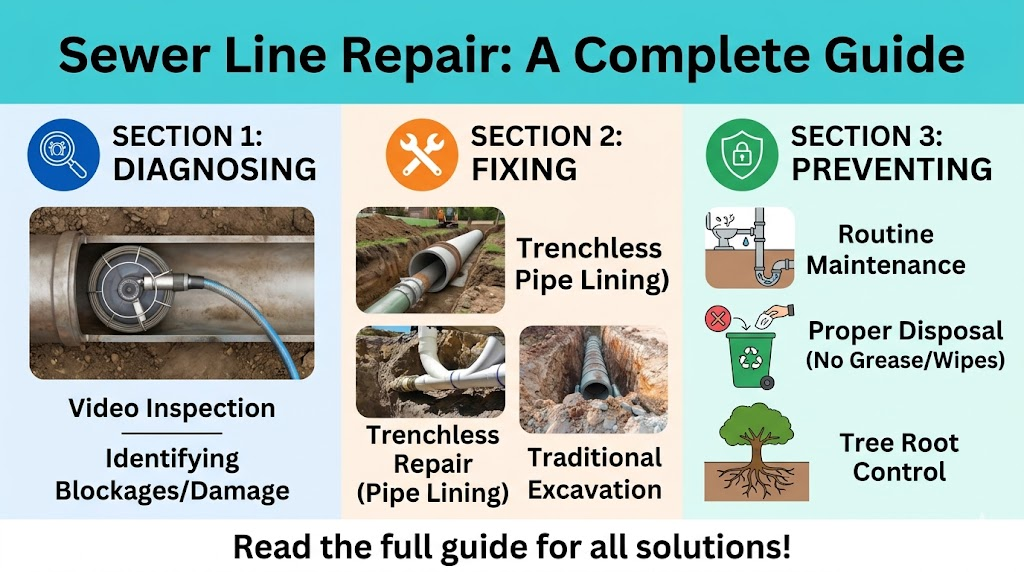
The most common method is a sewer camera inspection. During this process, a small waterproof camera attached to a flexible cable is inserted into the pipe through a cleanout or access point. The camera transmits live video footage, enabling plumbers to locate blockages, cracks, root intrusion, and collapsed sections.
This inspection process helps determine the best repair approach while minimizing unnecessary excavation.
Traditional Sewer Line Repair Methods
For many years, repairing a sewer line meant digging a trench to expose the damaged pipe. Traditional sewer line repair still remains a reliable option in certain situations.
During this process, workers excavate the area above the damaged pipe until it is fully accessible. The affected section is then removed and replaced with new piping. Once the repair is complete, the trench is filled and the surrounding area is restored.
Traditional repair is often necessary when pipes are severely damaged or completely collapsed. However, this method can disrupt landscaping, driveways, and other structures above the pipe.
The process may also take several days depending on the depth of the pipe and the complexity of the repair.
Modern Trenchless Sewer Line Repair Techniques
Advancements in plumbing technology have introduced trenchless sewer line repair methods that reduce the need for large-scale excavation. These techniques allow professionals to repair underground pipes through small access points rather than digging up entire sections of property.
Pipe Lining
Pipe lining, also known as cured-in-place pipe repair, creates a new pipe inside the existing damaged pipe. A flexible liner coated with special resin is inserted into the pipe and inflated. As the resin cures, it hardens into a smooth, durable pipe within the old structure.
This method seals cracks, prevents root intrusion, and restores proper wastewater flow.
Pipe Bursting
Pipe bursting replaces an entire sewer line without extensive excavation. A specialized tool is pulled through the existing pipe, breaking it apart while simultaneously installing a new pipe in its place.
This method works well when the original pipe is severely damaged but the surrounding ground conditions allow for replacement.
Slip Lining
Slip lining involves inserting a slightly smaller pipe into the damaged sewer line. The new pipe is sealed in place, creating a reinforced channel for wastewater to flow.
Although it slightly reduces pipe diameter, slip lining can effectively restore structural integrity to aging sewer systems.
Comparing Trenchless and Traditional Sewer Line Repair
Both trenchless and traditional repair methods have advantages depending on the situation.
Traditional sewer line repair offers a straightforward solution for severely collapsed pipes or complex structural damage. However, it often requires extensive digging and restoration work afterward.
Trenchless sewer line repair is less disruptive and typically faster to complete. Because it preserves landscaping and driveways, it may reduce overall property restoration costs.
The choice between methods depends on factors such as pipe condition, accessibility, soil stability, and the extent of damage.
Factors That Influence Sewer Line Repair Costs
The cost of sewer line repair varies widely because every plumbing system and property layout is different. Several factors determine the overall price.
The length of the sewer line is one of the most significant cost factors. Longer pipes require more materials and labor.
Depth also plays an important role. Pipes buried deep underground require additional excavation and specialized equipment.
Accessibility can further increase costs. If a sewer line runs beneath a driveway, patio, or building foundation, accessing the pipe becomes more complicated.
The repair method itself also affects pricing. While trenchless technologies may require specialized equipment, they can reduce the expense of restoring landscaping or pavement after the repair.
Finally, the severity of the damage determines whether a small section of pipe needs repair or the entire line must be replaced.
How Long Sewer Line Repairs Last
The durability of sewer line repair depends largely on the materials and methods used.
Modern pipe lining systems can last several decades, often exceeding 50 years with proper installation. High-density polyethylene pipes used in replacement projects may last up to a century under favorable conditions.
Proper maintenance plays a key role in extending the lifespan of repaired sewer lines.
Preventing Future Sewer Line Problems
Although sewer line repair is sometimes unavoidable, many problems can be prevented through proper maintenance and responsible plumbing practices.
Avoid pouring grease, oils, or fats down kitchen drains, as these substances can harden inside pipes and create blockages.
Dispose of hygiene products, wipes, and paper towels in the trash rather than flushing them.
Regular plumbing inspections can identify developing issues before they become major problems. Camera inspections every few years help detect root intrusion, buildup, or pipe deterioration early.
Landscaping decisions also matter. Planting trees far from sewer lines reduces the risk of root infiltration.
Professional drain cleaning services may also help maintain clear pipes and prevent stubborn clogs.
When Sewer Line Replacement Is the Best Option
In some situations, sewer line repair may not provide a long-term solution. When pipes are severely deteriorated, repeatedly clogged, or structurally unstable, replacing the entire line may be the most effective approach.
Full replacement ensures that outdated materials are removed and modern piping is installed. While the initial cost may be higher, it often eliminates recurring repair expenses and improves the reliability of the entire plumbing system.
Conclusion
Sewer line issues can quickly escalate from minor inconveniences to major property emergencies. Because the sewer system plays such a critical role in maintaining sanitation and functionality within a home, addressing problems quickly is essential.
Understanding the causes, warning signs, and repair options associated with sewer line repair allows property owners to make informed decisions when plumbing issues arise. Whether the solution involves clearing a blockage, relining a damaged pipe, or replacing an aging sewer line, professional repair ensures wastewater systems continue operating safely and efficiently.
With proper maintenance, responsible plumbing habits, and periodic inspections, homeowners can significantly reduce the likelihood of major sewer line problems and extend the lifespan of their underground plumbing infrastructure.
