

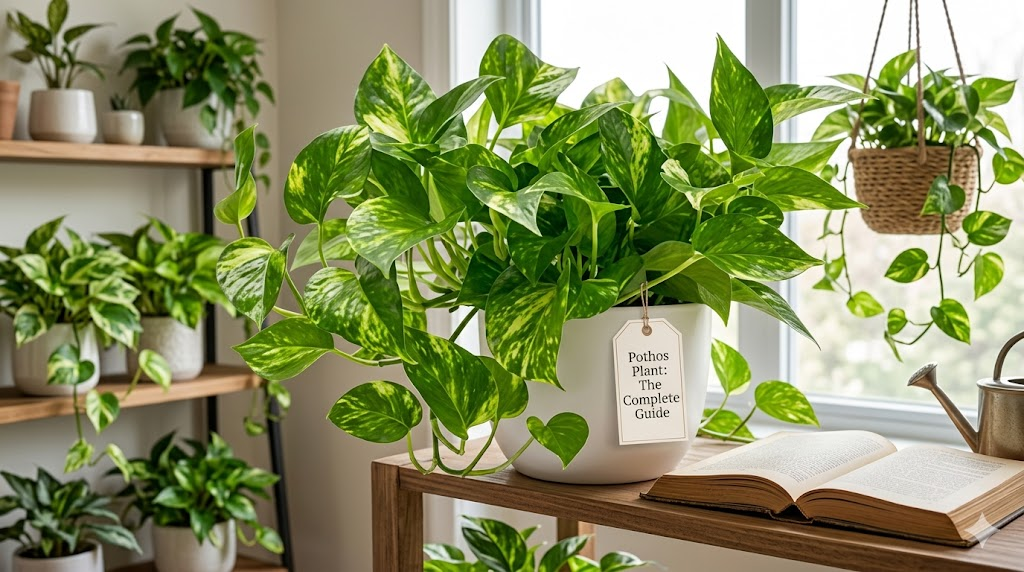
The pothos plant is one of the most beloved houseplants in the world, admired for its lush foliage, adaptability, and incredibly low maintenance requirements. Whether displayed in a hanging basket, climbing a trellis, or cascading from a shelf, the pothos plant brings vibrant greenery to indoor spaces with minimal effort.
Often recommended for beginners, the pothos plant thrives in a wide range of indoor conditions. It tolerates irregular watering, adapts to different lighting levels, and grows quickly compared to many other houseplants. These qualities make it an ideal choice for homes, apartments, offices, and even dorm rooms.
Botanically known as Epipremnum aureum, the pothos plant originates from tropical regions of Southeast Asia and the Pacific Islands. In its natural habitat, it climbs trees using aerial roots and can grow to impressive lengths. Indoors, however, it is typically cultivated as a trailing or climbing plant with vines that may reach several feet long.
This comprehensive guide explores everything you need to know about the pothos plant—from its characteristics and popular varieties to expert care techniques, propagation methods, and common problems.
What Is a Pothos Plant?
The pothos plant is a tropical evergreen vine widely grown as a decorative houseplant. It belongs to the Araceae family, which includes other popular indoor plants such as philodendrons and monsteras. The plant is most recognizable for its glossy, heart-shaped leaves that often display attractive patterns of green, yellow, or white.
One of the defining traits of the pothos plant is its trailing growth habit. The plant produces long vines that can either cascade downward from containers or climb upward when supported by structures like trellises or moss poles.
In nature, pothos plants can develop large leaves and grow dozens of feet long while climbing trees. Indoors, however, they remain much more compact, making them suitable for indoor decoration.
Another reason the pothos plant is so widely grown is its remarkable resilience. Unlike many tropical plants that require strict care routines, pothos can tolerate a variety of environmental conditions while continuing to grow vigorously.
Why the Pothos Plant Is So Popular
The pothos plant has become a staple in indoor gardening for several important reasons.
Easy Care Requirements
One of the biggest reasons people choose the pothos plant is its simplicity. It does not require constant attention or complicated care routines. Even beginners who are new to houseplants can keep pothos alive and thriving with basic care.
Adaptability to Indoor Environments
Many houseplants struggle to adjust to indoor environments with artificial lighting and inconsistent humidity levels. The pothos plant, however, adapts easily to these conditions. It grows well in bright rooms but can also survive in low-light spaces.
Attractive Trailing Growth
The cascading vines of the pothos plant create a visually appealing display in any room. Its vines can grow several feet long, making it perfect for hanging baskets, shelves, and wall-mounted planters.
Rapid Growth
Compared to many houseplants, pothos grows relatively quickly. Under favorable conditions, new leaves and vines appear frequently, creating a fuller and more vibrant plant.
Decorative Versatility
The pothos plant fits easily into different interior design styles. Whether the décor is modern, minimalist, rustic, or tropical, pothos adds a natural element that enhances the overall space.
Popular Varieties of Pothos Plant
Although many people refer to pothos as a single plant, several varieties exist. Each variety has unique leaf colors and patterns.
Golden Pothos
Golden pothos is the most widely recognized variety. Its deep green leaves are marked with golden-yellow streaks, giving the plant a vibrant and classic appearance. This variety is known for being extremely hardy and fast-growing.
Marble Queen Pothos
Marble Queen pothos is famous for its striking white and green marbled foliage. The high level of variegation gives the plant a dramatic appearance, although it typically grows slightly slower than other varieties.
Neon Pothos
Neon pothos stands out with its bright chartreuse or lime-green leaves. The vivid color adds brightness to indoor spaces and creates a bold visual statement.
Jade Pothos
Jade pothos features solid dark-green leaves without variegation. It is one of the most tolerant varieties when it comes to low-light conditions.
Manjula Pothos
Manjula pothos has broad leaves with a mix of green, cream, and white colors. The leaves often appear slightly wavy, giving the plant a unique and decorative look.
Ideal Growing Conditions for a Pothos Plant
Although pothos plants are known for their resilience, providing the right growing conditions helps them flourish and develop healthier foliage.
Light Requirements
The pothos plant grows best in bright, indirect light. Placing it near a window with filtered sunlight encourages faster growth and maintains vibrant leaf coloration.
However, pothos can also tolerate lower light conditions. In dim spaces, the plant may grow more slowly, and the variegation on the leaves may become less pronounced.
Direct sunlight should be avoided because it can scorch the leaves and cause discoloration.
Temperature
Pothos plants prefer temperatures between 18°C and 29°C (65°F to 85°F). These temperatures align well with typical indoor environments.
The plant should be kept away from cold drafts, air conditioning vents, and sudden temperature fluctuations, which can stress the plant.
Humidity
While pothos plants originate from tropical climates, they generally tolerate average indoor humidity levels. However, they will grow more vigorously in environments with moderate humidity.
Occasional misting or placing the plant near other plants can help increase humidity levels if needed.
Soil
Well-draining soil is essential for healthy pothos growth. A standard indoor potting mix works well, especially when combined with materials like perlite to improve drainage and aeration.
Heavy soil that retains too much moisture should be avoided because it can lead to root rot.
Watering a Pothos Plant
Proper watering is essential for maintaining a healthy pothos plant.
The best approach is to allow the top layer of soil to dry out before watering again. Overwatering is one of the most common mistakes people make when caring for pothos plants.
When watering, thoroughly soak the soil until water drains from the bottom of the pot. This ensures that the roots receive adequate moisture while preventing water buildup.
Signs of overwatering include yellow leaves and soggy soil. Signs of underwatering may include drooping leaves and dry soil.
Maintaining a consistent watering schedule based on the plant’s needs is the best way to prevent these issues.
Fertilizing the Pothos Plant
Although pothos plants are not heavy feeders, occasional fertilization can support stronger growth and healthier foliage.
During the active growing season—typically spring and summer—a balanced liquid houseplant fertilizer can be applied once every four to six weeks. Diluting the fertilizer helps prevent nutrient burn.
In autumn and winter, the plant’s growth naturally slows, so fertilization should be reduced or stopped during these months.
Excess fertilizer can accumulate in the soil and damage the plant, so moderation is important.
Pruning and Maintenance
Regular pruning helps maintain the shape and fullness of the pothos plant.
Because the plant grows as a vine, it can become long and sparse over time. Trimming the vines encourages new growth and creates a bushier appearance.
Pruning also helps remove damaged or yellowing leaves, improving the plant’s overall health.
Additional maintenance practices include wiping dust from the leaves and occasionally rotating the plant so all sides receive equal light exposure.
Propagating a Pothos Plant
One of the most rewarding aspects of owning a pothos plant is how easy it is to propagate.
Propagation allows gardeners to grow new plants from cuttings taken from the original plant.
Water Propagation
Water propagation is the most common method.
To propagate a pothos plant in water:
- Cut a healthy vine just below a node.
- Remove the lower leaves from the cutting.
- Place the cutting in a container of water with the node submerged.
- Keep the container in bright, indirect light.
Within a few weeks, roots will begin to grow. Once the roots are several inches long, the cutting can be planted in soil.
Soil Propagation
Cuttings can also be planted directly into moist soil. With proper care and moisture, the cutting will develop roots and grow into a new plant.
Propagation is an excellent way to expand a plant collection or share plants with friends and family.
Common Problems With Pothos Plants
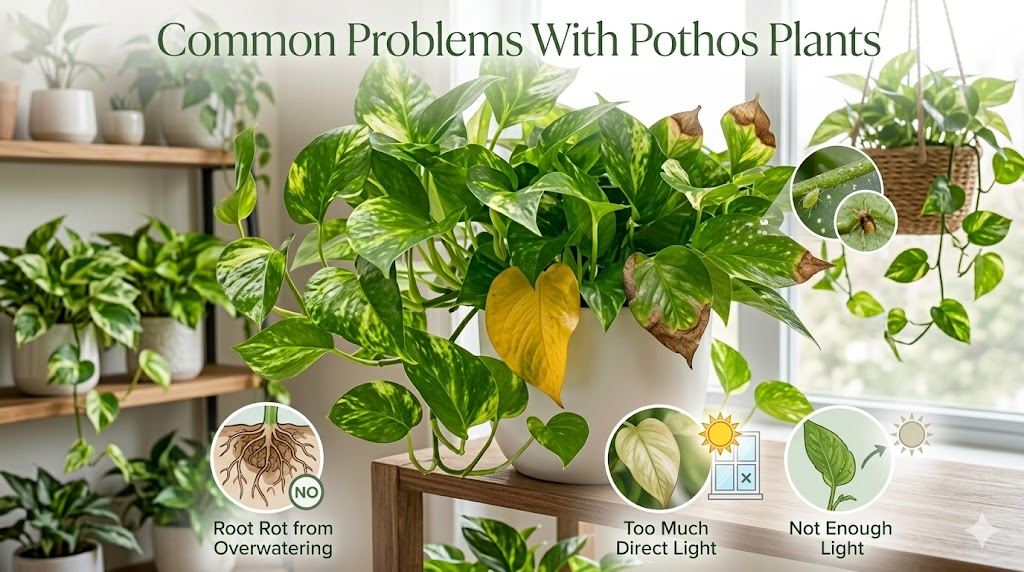
Even though pothos plants are hardy, they can occasionally develop problems.
Yellow Leaves
Yellow leaves are often a sign of overwatering or poor drainage. Allowing the soil to dry out between waterings usually resolves the issue.
Brown Leaf Tips
Brown tips may indicate low humidity, inconsistent watering, or excessive fertilizer.
Leggy Growth
When pothos plants receive insufficient light, they may develop long, sparse vines with fewer leaves. Moving the plant to a brighter location usually improves growth.
Root Rot
Root rot occurs when the plant sits in waterlogged soil. Ensuring proper drainage and reducing watering frequency helps prevent this problem.
Growing Pothos in Water
An interesting feature of the pothos plant is its ability to grow entirely in water.
Many people place pothos cuttings in decorative glass containers filled with water. The plant can survive for long periods in water as long as the water is replaced regularly.
When growing pothos in water, it is important to change the water every couple of weeks and occasionally add a small amount of liquid fertilizer to provide nutrients.
This method is popular for decorative displays because the roots become visible through transparent containers.
Safety Considerations
Although the pothos plant is widely grown indoors, it is important to know that the plant contains compounds that can be toxic if ingested.
The leaves contain calcium oxalate crystals, which may cause irritation and discomfort if eaten by humans or pets.
For households with cats, dogs, or small children, the plant should be placed in locations where it cannot be easily reached.
Decorative Uses of the Pothos Plant
The pothos plant is highly valued not only for its ease of care but also for its versatility in interior decoration.
Common decorative uses include:
- Hanging baskets with cascading vines
- Wall-mounted planters
- Shelf and cabinet décor
- Climbing trellises or moss poles
- Office desk plants
Because pothos can tolerate fluorescent lighting and relatively low light conditions, it is often used in offices, shopping centers, and commercial interiors.
The plant’s flowing vines add movement and texture to indoor spaces, creating a calming and natural atmosphere.
Conclusion
The pothos plant stands out as one of the most reliable and versatile houseplants available today. Its lush foliage, trailing vines, and remarkable resilience make it an excellent choice for both beginners and experienced plant enthusiasts.
With minimal care requirements—moderate watering, indirect light, and occasional pruning—the pothos plant can thrive for many years indoors. Its adaptability allows it to grow in various environments, from bright living rooms to low-light office spaces.
Whether grown in soil, propagated in water, or displayed in decorative planters, the pothos plant continues to be a favorite among indoor gardeners. Its beauty, durability, and simplicity ensure that it remains one of the most popular houseplants in homes around the world.
