

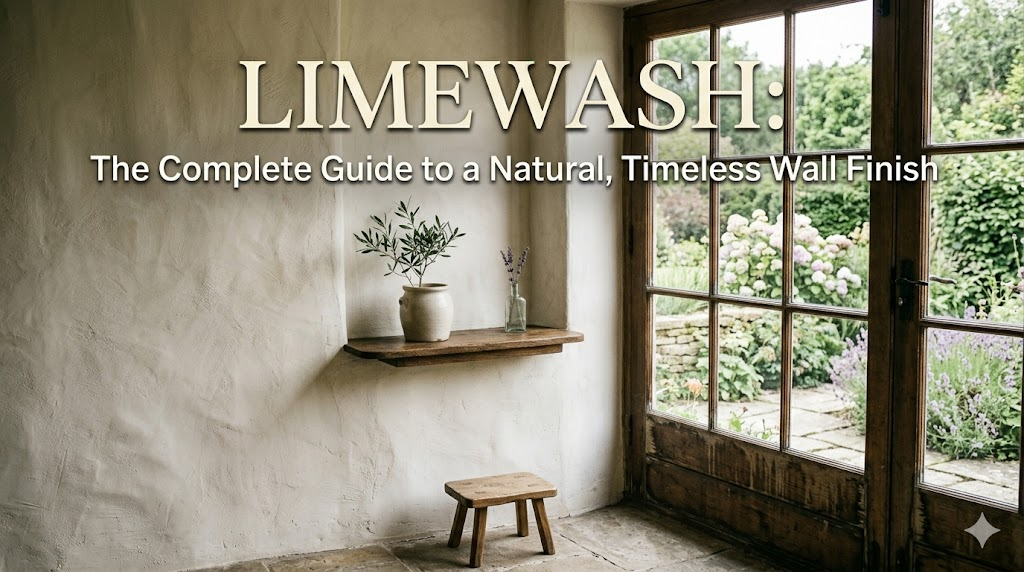
Limewash is one of the oldest and most enduring finishes used in architecture, yet it feels more relevant today than ever. As homeowners and designers increasingly move toward natural, sustainable materials, limewash has re-emerged as a preferred alternative to modern synthetic paints. Its soft, chalky texture, subtle tonal variation, and breathable qualities give it a unique appeal that cannot be replicated by conventional coatings.
This article offers a comprehensive look at limewash—what it is, how it works, where it excels, and why it continues to be used in both traditional and contemporary spaces.
What Is Limewash?
Limewash is a mineral-based coating made primarily from slaked lime (calcium hydroxide) and water. In some cases, natural pigments are added to create different shades, though traditional limewash is often associated with its classic white finish.
Unlike standard paint, which forms a layer on top of a surface, limewash penetrates porous materials such as stone, brick, and plaster. Once applied, it reacts with carbon dioxide in the air in a process called carbonation, gradually turning back into limestone. This chemical transformation is what gives limewash its durability and longevity.
The result is not just a coating, but a finish that becomes part of the wall itself—creating a breathable, living surface that evolves over time.
The Historical Significance of Limewash
Limewash has been used for thousands of years across different cultures and climates. Ancient civilizations relied on it for both functional and decorative purposes. It was widely used in Europe, the Middle East, and parts of Asia long before modern paints were developed.
Historically, served several important roles. It was affordable and easy to produce, requiring only lime and water. It also had natural antibacterial properties, making it ideal for use in homes, farms, and public buildings. In many rural communities, applying became a seasonal tradition, particularly before religious festivals or changing seasons.
Even today, many historic buildings still retain their original surfaces, a testament to the material’s durability and effectiveness.
Key Properties of Limewash
Breathability and Moisture Regulation
One of the defining characteristics of limewash is its breathability. It allows moisture to pass through walls rather than trapping it inside. This is especially important in older buildings, where trapped moisture can lead to dampness, mold, and structural damage.
Because limewash works with the natural movement of moisture, it helps maintain a healthier indoor environment and protects the integrity of the building over time.
Natural and Eco-Friendly Composition
is made from natural ingredients and contains no synthetic chemicals or plastics. It is free from harmful emissions and does not release volatile organic compounds into the air. This makes it an environmentally responsible choice for both interiors and exteriors.
Additionally, is biodegradable and has a relatively low environmental impact compared to modern paints.
Unique Visual Texture
The aesthetic appeal of is one of its most attractive features. It creates a soft, matte finish with subtle variations in tone. These variations are influenced by the application technique, the number of coats, and the way light interacts with the surface.
Rather than appearing flat and uniform,adds depth and movement to walls, giving them a more organic and handcrafted appearance.
Antibacterial Qualities
Due to its alkaline nature, naturally resists bacteria, mold, and fungi. This property made it especially valuable in agricultural settings and continues to be beneficial in modern homes, particularly in humid environments.
Limewash vs Conventional Paint
Understanding the differences between and standard paint is essential when deciding which material to use.
Application and Adhesion
Conventional paint sits on top of a surface and forms a sealed layer. on the other hand, soaks into porous materials and bonds with them chemically. This fundamental difference affects everything from appearance to performance.
Appearance
Limewash produces a soft, weathered look with natural tonal variation. In contrast, modern paints typically offer a smooth, consistent finish with uniform color.
Durability
While modern paints may initially appear more durable, they can peel or crack over time. does not peel in the same way; instead, it gradually wears and fades, often enhancing its character.
Maintenance
Limewash requires a different approach to maintenance. It cannot be scrubbed clean like washable paints, and touch-ups may not blend seamlessly. However, reapplying a fresh coat is relatively simple and restores the surface effectively.
Advantages of Using Limewash
Enhances Indoor Air Quality
Because is breathable and free from harmful chemicals, it contributes to a healthier indoor environment. It helps regulate humidity and reduces the risk of mold growth.
Ideal for Traditional and Heritage Buildings
is highly compatible with older construction materials such as lime plaster and natural stone. It supports the structural integrity of these materials rather than compromising them.
Aesthetic Versatility
Although often associated with rustic or traditional styles, can also be used in modern interiors. Its subtle texture complements minimalist designs and adds warmth to contemporary spaces.
Cost-Effective and Accessible
The basic ingredients of are inexpensive, making it a cost-effective option for large surfaces. Its simplicity also makes it accessible for those interested in traditional building techniques.
Limitations of Limewash
Despite its many benefits, is not suitable for every situation.
Surface Compatibility
Limewash works best on porous surfaces. It may not adhere well to previously painted walls, drywall, or non-absorbent materials without proper preparation.
Application Sensitivity
Applying requires skill and patience. The final appearance depends heavily on technique, and achieving consistent results may take practice.
Limited Washability
Limewash surfaces are not designed to be scrubbed or cleaned aggressively. This makes them less suitable for areas prone to frequent staining or heavy use.
Color Variation
While many people appreciate the natural variation in , it can be unpredictable. Achieving an exact color match across different areas can be challenging.
Where Limewash Works Best
Exterior Walls
Limewash is particularly effective on exterior masonry. It protects surfaces while allowing them to breathe, reducing the risk of moisture damage.
Interior Feature Walls
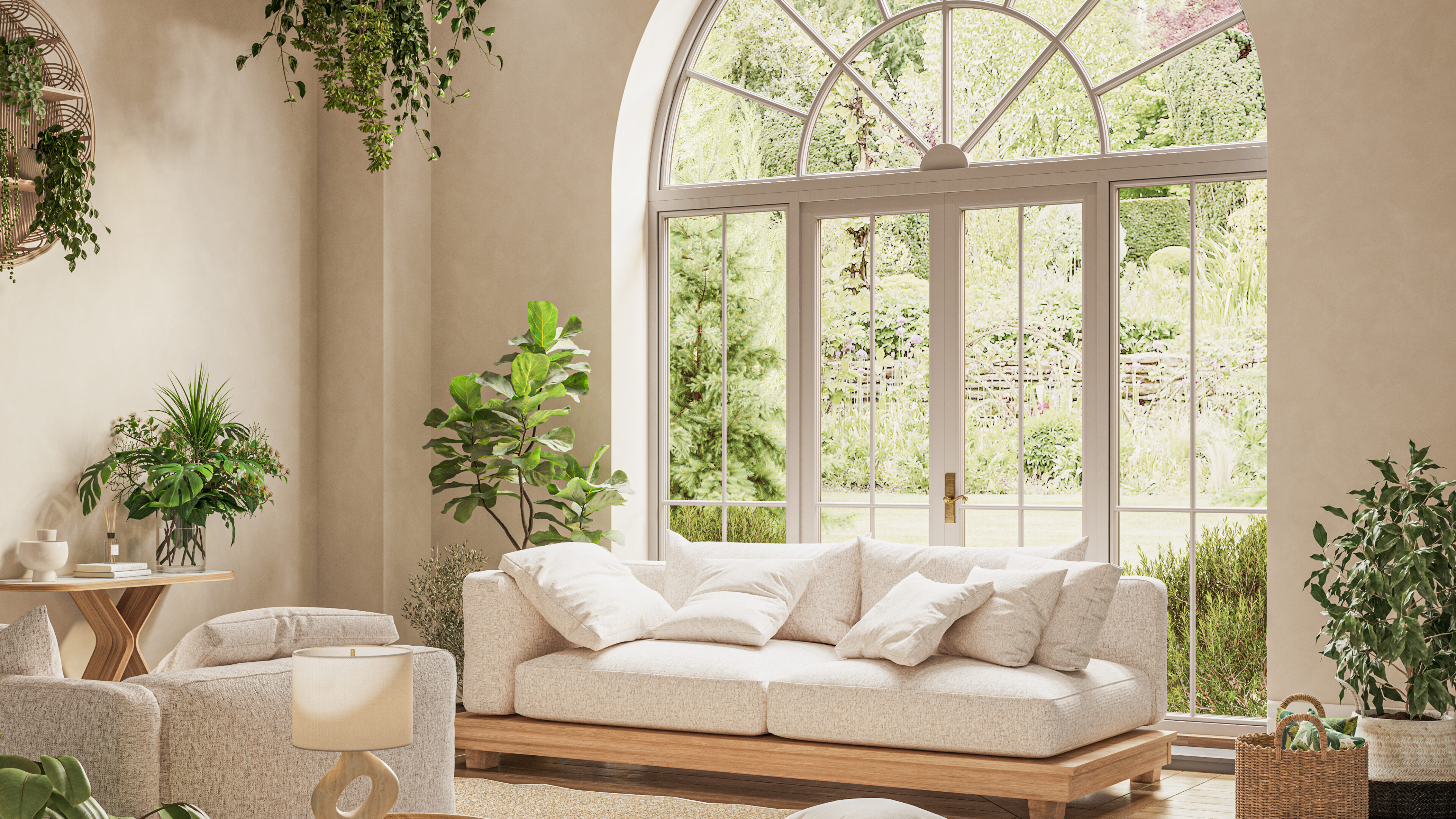
In interior design, is often used to create accent walls that stand out through texture rather than bold color. It adds depth and character to living rooms, bedrooms, and hallways.
Historic Restoration Projects
For restoration work, is often the preferred choice because it maintains the authenticity of older buildings and works harmoniously with traditional materials.
How to Apply Limewash
Preparing the Surface
Proper preparation is essential. The surface must be clean, free of dust and grease, and slightly damp to allow the limewash to absorb evenly.
Mixing the Limewash
Limewash is typically diluted with water to achieve the desired consistency. Pigments can be added if color is required.
Applying the Coats
Limewash is applied with a brush, using thin, even layers. A crisscross or random brushing technique helps create the characteristic texture. Multiple coats are usually necessary to build depth and achieve the desired finish.
Drying and Curing
As limewash dries, it undergoes carbonation and hardens over time. The color may change slightly during this process, often becoming lighter as it cures.
Limewash Colors and Design Possibilities
Although white is the most traditional shade, can be tinted using natural pigments to create a wide range of colors. Earthy tones, warm neutrals, and soft pastels are particularly popular.
The finish interacts beautifully with natural light, creating subtle shifts in tone throughout the day. This dynamic quality adds a sense of life and movement to walls.
Limewash in Contemporary Interiors
Modern designers are increasingly turning to limewash to create spaces that feel authentic and grounded. It is especially popular in minimalist interiors, where its texture adds visual interest without overwhelming the design.
In rustic or Mediterranean-inspired spaces, enhances the natural character of the architecture. It also works well in urban settings, where it can soften the sharpness of modern materials like concrete and steel.
Maintenance and Longevity
Limewash is durable when applied correctly, but it requires a different mindset when it comes to maintenance.
Rather than resisting change, embraces it. Over time, it develops a patina that reflects the environment and use of the space. This aging process is often considered part of its charm.
When necessary, a fresh coat can be applied to renew the surface. This process is straightforward and does not require stripping the existing finish.
Conclusion
Limewash is more than just a decorative finish—it is a material rooted in history, craftsmanship, and sustainability. Its breathable nature, natural composition, and distinctive aesthetic make it a compelling choice for both traditional and modern applications.
While it may not offer the uniformity or convenience of synthetic paints, provides something far more valuable: character, authenticity, and a connection to time-honored building practices.
For those seeking a finish that combines beauty with functionality, limewash remains one of the most rewarding options available.
